
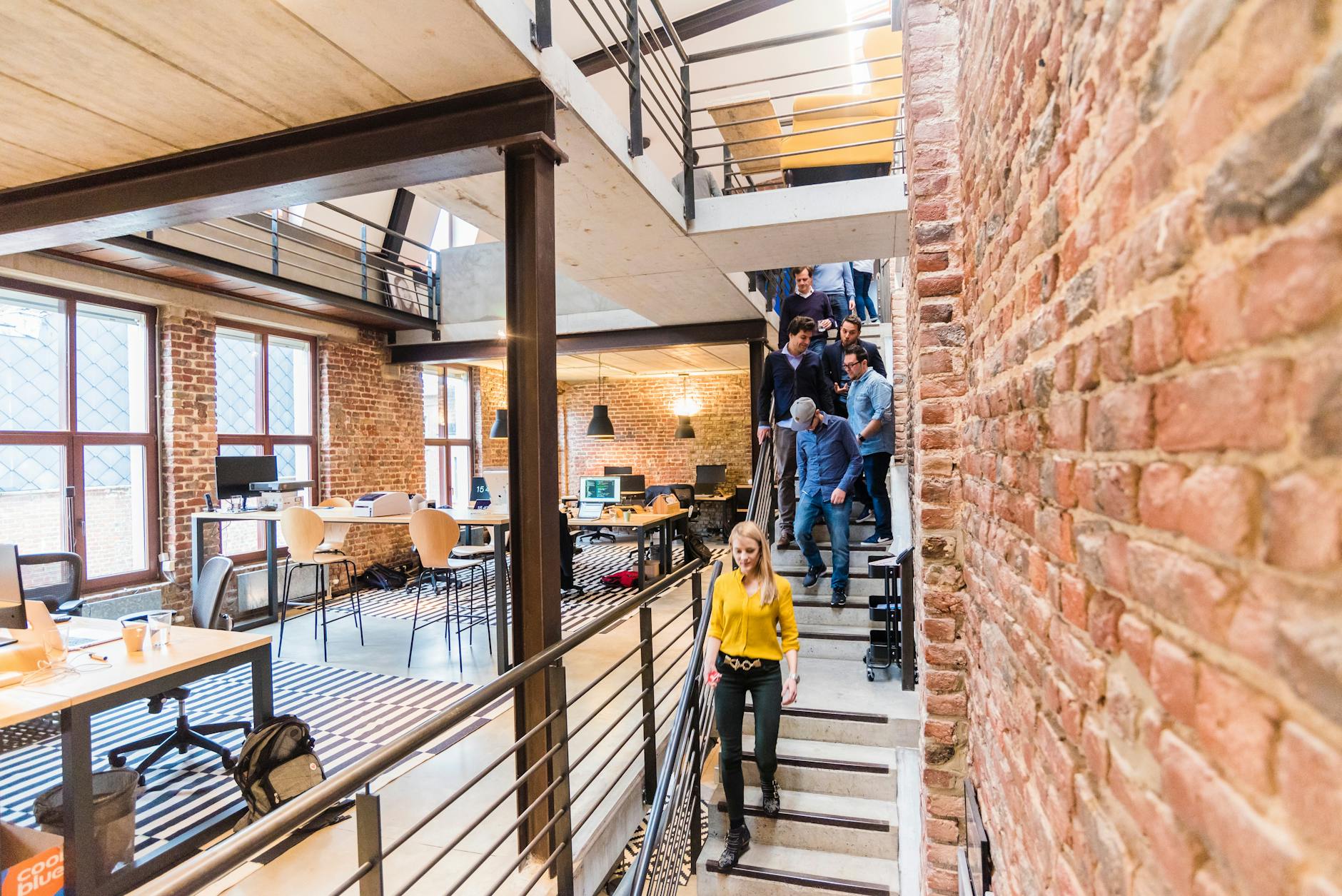
Natasha Reacher, Senior Workplace Consultant at Cresa, discussed common challenges for organizations’ hybrid strategies, the misconception of links between attendance and engagement, and the importance of understanding their data.
A lot of organizations have a hybrid strategy in place, but they don’t seem to be working. What trends are you seeing with those strategies, and how effective are they? While many organizations are operating in a hybrid fashion, the devil is in the details. Decisions surrounding hybrid strategies are often underdeveloped and therefore can be misinformed. For example, quite a few companies are mandating a set number of days to be in the office. Without understanding if there is alignment between their leadership, management, and staff, organizations are often failing to achieve targets for in-office attendance. If one of the links in the chain is broken, you’re sunk!
One of the trends we are seeing is focusing on creating optimal office experiences by designing spaces that are inviting and offer different settings to support multiple types of work. While a well-designed space is important, it is only one piece of the equation and is unlikely to solve attendance issues. It could contribute to the solution, but the underlying problems are likely to be deeper.
Many organizations view in-office attendance as the most important determinant of employee engagement. Why do you think this can be misleading? There has been a fundamental shift in employee thinking, which has come with the awareness that there is a choice. Prior to the pandemic, employees came to the office. During the pandemic, staff were given the autonomy to work from home, and most were able to do so quite effectively. They are now being asked to come back to the office, based on the assumption that attendance is a measurement for engagement. Could the request to come back potentially negatively impact levels of engagement? Leaders might want to evaluate the accuracy of their assumptions. To do so, they need to understand “who” is showing up and “who” is engaged.
What kind of information should leaders be seeking to help them come to informed decisions about how to create a successful work model? There isn’t a one-size-fits-all solution, but we are seeing empathy becoming increasingly important in the workplace – it has been demonstrated that empathetic population, there is a diversity of traits, circumstances, backgrounds, perspectives, and experiences. Recognizing and understanding that different people have different needs will arm leaders with the knowledge they need to create an optimal work model. For example, when companies measure badge swipe data, they are gathering numerical information only. This data isn’t helping them understand anything about “who” and “why,” which are critical pieces of information needed to understand engagement.
Portions of this article originally appeared on the Cresa website.
The Sundance Company
Established in 1976, The Sundance Company has the experience to help you with your commercial real estate needs throughout the Boise Valley. If your requirements include property management, leasing, real estate development, project planning, construction or space planning then look to us. The Sundance Company has more than 1.6 million square feet of office and industrial space available in prime locations in the Boise metropolitan area. More information is available at www.sundanceco.com or 208.322.7300.
 The Sundance Company