How to Get Useful Customer Feedback

Photo by Tima Miroshnichenko on Pexels.com

Do you have customers that have become a one-and-done missed opportunity?

Why didn’t they come back?

Answering this critical question depends on a powerful tactic essential to every business’s success: Asking them. Below are five essential methods of engaging customers for feedback.

1. Survey New Customers

The moment a prospective customer chooses to become an actual customer is crucial for your business. Send new customers a survey via email or SMS text to gain insights into this decision so that you can create better first impressions—and better site conversion—in the future.

  • Lead the survey with a simple, easy-to-answer question. For example: “Would you recommend ABC Widgets to a friend?”
  • Follow up with multiple-choice questions asking what your business does well and what it could do better.
  • End with an open-ended question that lets customers say whatever is on their minds.
  • Allow enough time to pass for the customer to complete their transaction. If you deliver, wait until the customer receives their shipment to send the survey. 3-5 days post-purchase is a good rule of thumb.

2. Ask for Feedback on Your Site

Ideas strike anytime, but ideas for improving your website mainly arise while customers use it. Provide opportunities for feedback throughout your site experience to increase your odds of capturing actional information.

  • General feedback form: Create a feedback widget that follows customers on your site. This allows them to share thoughts in real-time as they arise.
  • Post-purchase survey: Take a more proactive approach by asking customers to complete a short survey after they make a purchase.
  • Live chat sessions: Include a survey at the end of a live chat session. This is a great way to engage a customer primed to deliver constructive feedback about your business.

3. Ask for Reviews

Positive reviews will help promote your popular products and services. Negative ones will provide insights on optimizing what needs improving. There are two key opportunities to ask for reviews:

  • On product and services pages: Add reviews to your site’s product and services pages with a prompt to leave one.
  • Post-purchase email: Send an email or SMS text after customers have had a chance to use your product. The best time to do this depends on what you sell (and how quickly your customers will use it). A good rule of thumb is 10 to 14 days post-purchase.

4. Conduct Customer Interviews

Online surveys are the most efficient way to garner customer feedback. But personal interviews allow for a deeper insight. Customers have more time to share thoughts, and you can ask follow-up questions that online surveys don’t allow. Consider interviewing your customers in the following ways:

  • Customer roundtable: Talk to a group of customers in a physical or virtual location about your company and their needs. This lets you gain multiple viewpoints quickly. One risk to this approach is groupthink: Customers often influence each other’s opinions.
  • One-on-one interviews: Instead of talking to customers simultaneously, conduct separate interviews over a phone or video call. This allows you to receive uninfluenced opinions and engage in in-depth conversations to learn more about their needs.
  • Multiple interviews over time: Take your insights to the next level by checking in with a regular group of customers over time. You can track their reactions to enhancements you make to your website and other areas of your business, plus learn about new needs and challenges they face as they arise.

5. Monitor social media

Surveys, forms, and interviews provide feedback in a controlled setting. Social media is anything but controlled, with positive and negative emotions often driving discourse. Monitoring and quickly responding to feedback on your platforms is vital to maintaining a productive conversation with your customers.

  • Monitor comments: Enable alerts in your social media accounts to stay on top of replies, shares, and other customer engagement.
  • Respond quickly and professionally: Turning a negative into a positive with quick and helpful responses on social media puts your customer service on display for all current and prospective customers.
  • Engage in social listening: Social listening tools let you monitor online conversations about your company, competitors, and industry. They’re a great way to keep a finger on the pulse of your brand’s perception and emerging trends in your trade.

Additional Benefits of Asking for Feedback

The biggest benefit of asking for feedback is receiving honest opinions about your company along with other customer insights. But it’s not the only advantage you gain.

  • Customer testimonials: Some feedback you receive will be positive, highlighting what you do well. Sharing customers’ enthusiasm for your company is a powerful way to build your brand’s credibility.
  • Relationship building: Studies show that active listening—listening to understand—strengthens relationships. This is true for the relationship between your business and your customers. When you ask for feedback, customers feel heard and validated and develop a more favorable opinion of your company.

Portions of this article originally appeared on Quill website.

The Sundance Company                                                               
Established in 1976, The Sundance Company has the experience to help you with your commercial real estate needs throughout the Boise Valley. If your requirements include property management, leasing, real estate development, project planning, construction or space planning then look to us. The Sundance Company has more than 1.6 million square feet of office and industrial space available in prime locations in the Boise metropolitan area. More information is available at www.sundanceco.com or 208.322.7300.

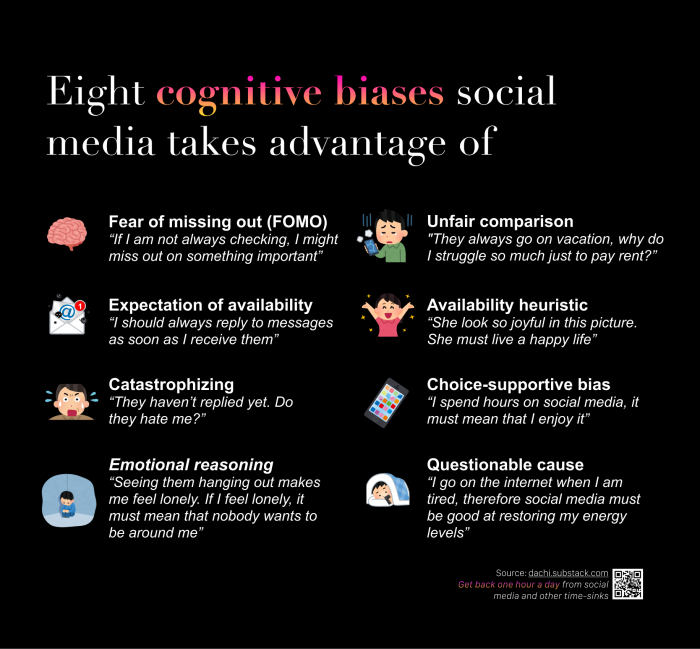
How Does Social Media Mess With Your Head

The Sundance Company                                                               
Established in 1976, The Sundance Company has the experience to help you with your commercial real estate needs throughout the Boise Valley. If your requirements include property management, leasing, real estate development, project planning, construction or space planning then look to us. The Sundance Company has more than 1.6 million square feet of office and industrial space available in prime locations in the Boise metropolitan area. More information is available at www.sundanceco.com or 208.322.7300.

Essential Technology Investments for Real Estate 

Photo by Harsch Shivam on Pexels.com

Here’s a list of technology tools that won’t drain your budget and will still help you stay efficient.

Listing Websites

The first relatively budget-friendly investment to consider is to create a branded listing website or to post your properties on a listing platform. Nowadays, it just doesn’t make sense to invest in other technologies if nobody can see your listings online. Plus, not having to be physically present for the initial office viewing is what your customers appreciate the most. Specifically, a branded listing website can:

  • Enable you to introduce new listings to the public faster and more efficiently.
  • Reduce the time your team spends on administrative tasks.
  • Capture new leads from your listings directly into your CRM or deal management system (if you have one).
  • Offer user-friendly property search features to your customers.

Сhat GPT

Chat GPT is an AI-based tool that has been making waves globally with its conversation-like AI capabilities. Even though it’s not yet widely adopted in real estate, it could relieve some of your basic (but time-consuming) tasks, such as:

  • Writing descriptions for property listings.
  • Generating text for social media posts.
  • Creating marketing emails based on the information you feed into them.
  • Creating detailed guides about specific neighborhoods.
  • Drafting legal documents.
  • Answering frequently asked questions.
  • Doing complex calculations.

If you haven’t yet seen Chat GPT, create an account now. Then, start your conversation by asking it to write a listing for a two-bedroom, three-bathroom home in Boise. You’ll be amazed how quickly the bot will spit out an elegantly worded description.

CRM

Many real estate agents use Excel as their customer relationship management (CRM) technology. Granted, Excel is good at what it does, but only for industry beginners and small agencies with limited financial and human resources.

And, because Excel was not designed primarily as a collaborative platform — an environment in which the real estate industry thrives — savvy business owners use a real estate CRM, instead.

Although a full-fledged CRM is far more costly than Excel, investing in a CRM will allow you to:

  • Organize the vast amount of data that real estate agents use.
  • Store data about clients, deals, assets, tenants, partners, leases, deals, inquiries and commissions securely in one place without having to worry about data leaks.
  • Automate half of the repetitive task in the real estate transaction process so you can focus on more important tasks.
  • Begin strategic planning of follow-up and email campaigns with a systematic cadence.
  • Track relationships between clients, contacts, properties, deals and more.

Tools for Data Management

Ideally, all real estate companies should have a CRM, but making such a significant investment upfront might not always be feasible. Alternatively, you might consider leveraging your data in a more intelligent way by using data management tools, which allow you to:

  • Search for properties and contacts in databases with thousands of records.
  • Provide a client with a list of properties based on specific search criteria (for example, X miles from city A; budget range; or year built).
  • Filter and narrow the list that you’ll send to clients quickly and easily.
  • Find targeted audiences for new properties that have an abundance of availability.
  • Perform advanced searches of contacts for your targeted email campaigns.
  • Identify prospects who require your attention.

Flyer Generation Tools

There are template-based real estate flyer generation tools that offer great DIY functionality at moderate prices. By investing in these, you’ll:

  • Have access to a library of predefined templates for any type of document or marketing collateral.
  • Generate presentation-ready reports with detailed property descriptions and photos in just a few clicks.
  • Avoid manual input of property information and images by syncing these tools with your current systems.
  • Create marketing brochures, various activity reports, and documents quickly and without external help.

Portions of this article originally appeared on Commercial Cafe website.

The Sundance Company                                                               
Established in 1976, The Sundance Company has the experience to help you with your commercial real estate needs throughout the Boise Valley. If your requirements include property management, leasing, real estate development, project planning, construction or space planning then look to us. The Sundance Company has more than 1.6 million square feet of office and industrial space available in prime locations in the Boise metropolitan area. More information is available at www.sundanceco.com or 208.322.7300.

Vitamin Cheat Sheet

The Sundance Company                                                               
Established in 1976, The Sundance Company has the experience to help you with your commercial real estate needs throughout the Boise Valley. If your requirements include property management, leasing, real estate development, project planning, construction or space planning then look to us. The Sundance Company has more than 1.6 million square feet of office and industrial space available in prime locations in the Boise metropolitan area. More information is available at www.sundanceco.com or 208.322.7300.
Will ChatGPT Change Commercial Real Estate?

Photo by Pixabay on Pexels.com

Filippo Incorvaia doesn’t know much about poultry. He’s a real estate broker, not a farmer.

To help a commercial client identify a possible warehouse distribution center, he would have to do hours of research on the poultry industry. But with the emergence of AI chatbot ChatGPT, the Miami-based Incorvaia says he can find what he needs to know within five minutes.

“That’s how I optimize my service and then take my expertise, take the knowledge that I have about this client or this customer, and provide the best result,” said Incorvaia, CEO of FI Real Estate Brokerage. “That’s what makes you a super broker, and with ChatGPT, ultimately everybody can be a super broker.”

Stories of such epiphanies are beginning to make the rounds in commercial real estate. Brokers are turning to the bot developed by artificial intelligence firm OpenAI to assist with everyday tasks. The free technology produces conversational answers to inquiries rather than responding to questions and scraping the internet for search results.

Gparency’s Ira Zlotowitz said that the bot will ultimately close the knowledge gap among brokers and further emphasize the importance of personal connections.

“ChatGPT is the brain in the room,” Zlotowitz said. “The only thing left is relationships. There’s no more knowledge needed because basically, you could feed it your business.”

Zlotowitz said that he is in the process of incorporating ChatGPT into Gparency. The goal is to provide customers with information such as property listings and bank lenders without having to call someone.

“Where I think it’s changing the business is there’s no such thing as an off-market deal that no one knew,” Zlotowitz said. “Everyone’s going to know everything.”

Olive Tree Ventures’ Jeremy Kaner said that he is seeing exciting technology in multifamily, a market that Olive Tree has invested in across the Midwest and Sun Belt.

“Everything from leasing chatbots to materials procurement, we’ve started to see this flow of technology, not to come in to fully replace employees, but just to make employees more efficient,” Kaner said. “We’re really on the precipice of seeing this revolutionizing real estate.”

However, ChatGPT is disconnected from the internet, which limits its knowledge of current events, and is frequently unavailable because too many people are on it. The bot reportedly had 1 million users in its first week. OpenAI has started piloting a paid version called ChatGPT Professional.

“When it gets plugged back in (to the internet) and gets all that data and all that knowledge that it learned from humankind, it will be really interesting to see how it evolves,” Incorvaia said. “It’s really remarkable.”

It’s unclear how widely the technology has permeated commercial real estate. Some firms, such as Savills and Marcus & Millichap, told The Real Deal they aren’t using it yet. CBRE declined to say whether it was using the chatbot for services. Other brokerages did not comment.

Current Real Estate Advisors’ Adam Henick said that neither his firm nor his clients have regularly employed ChatGPT, but he acknowledged that it is likely going to play a role in the future.

“I like to think that there are enough intricacies and unique things on everything that we deal with on a day-to-day basis that we’re not being replaced by robots just yet,” Henick said. “But there’s certainly a world for us to coexist at some point, so I am looking forward to understanding the technology more and seeing what it’s capable of and how it could benefit our business.”

Whether or not ChatGPT will lead to job cuts is the elephant in the room, but a common sentiment is that it will assist rather than replace real estate professionals. However, as attrition occurs, some tasks will be automated, said Olive Tree’s Ian Bel.

“Certainly, over time … there will be job elimination, but I don’t think it’s as horrible as a lot of people fear,” said Bel, whose firm is experimenting with ChatGPT. “It’s more about helping to make people really good at what they do and really focusing on the most impactful human judgment they can bring.”

Most observers agree that ChatGPT’s proliferation in commercial real estate is inevitable.

“The thing we can’t stop is technology,” Incorvaia said. “The genie is out of the bottle.”

Portions of this article originally appeared on The Real Deal website.

The Sundance Company                                                                
Established in 1976, The Sundance Company has the experience to help you with your commercial real estate needs throughout the Boise Valley. If your requirements include property management, leasing, real estate development, project planning, construction or space planning then look to us. The Sundance Company has more than 1.6 million square feet of office and industrial space available in prime locations in the Boise metropolitan area. More information is available at www.sundanceco.com or 208.322.7300.

A Guide to Coffee Around the World

The Sundance Company                                                                
Established in 1976, The Sundance Company has the experience to help you with your commercial real estate needs throughout the Boise Valley. If your requirements include property management, leasing, real estate development, project planning, construction or space planning then look to us. The Sundance Company has more than 1.6 million square feet of office and industrial space available in prime locations in the Boise metropolitan area. More information is available at www.sundanceco.com or 208.322.7300.

Recruiting A New Generation of Talent to Commercial Real Estate

Photo by Rebrand Cities on Pexels.com

Some of the largest commercial real estate brokerage firms in the industry are expanding their recruiting efforts and trying new approaches and programs that cast a wide net to lure those from the soon-to-be largest generation ever, Generation Z.

The younger generations are a hugely important part of the country’s workforce. Gen Z and Millennials make up close to half of the full-time workforce in the US, at 46 percent, according to the latest Gallup polls. Members of these generations expect certain things from their workplace, the most important being an employer that cares about their wellbeing. Next to that, a company’s ethics, transparency, and commitment to a diverse and inclusive workplace. 

“The thing about Gen Z’ers is they check their receipts, and they’re asking what type of resources they have in their office space,” said John H. Jones, a longtime real estate veteran and PropTech thought leader. He ticked off important aspects of an office environment like air filtration systems, energy efficiency, and recycling as common questions from younger job candidates about their potential workspace. 

At CBRE, the world’s largest commercial real estate brokerage firm, recruiters are looking at candidates outside the usual places. Chelsea Cutler, a Senior Managing Director in recruiting, onboarding, and training/development in the firm’s Capital Markets division, connected with one of the largest school districts in Colorado to teach high schoolers about commercial real estate. 

Another effort by the brokerage firm involved something of a second act. Recruiters asked a dozen professional soccer players to participate in a 5-day, 40-hour workshop to learn the ins and outs of commercial real estate. 

“They’re still active in their careers, but know their careers are ending sooner or later and wanted to learn more about commercial real estate,” said Cutler, who described the athletes as “wonderful recruits” who are methodical, hardworking, and great at collaboration. 

“If you find people with the right drive for CRE, they are perfect candidates,” she said. A soccer union where the players are members looked at the partnership as an externship to help players explore post-career paths. Afterward, many of the players wrote emails to Cutler thanking the firm for the opportunity and respecting that they had more to offer than physical ability.

Not only is Gen Z expected to be the most populous generation in history, but they are also the most diverse. Pew Research has found that 48 percent of the generation identifies as non-white, and that’s something commercial real estate firms are taking to heart. 

Giselle Battley is the D&I Director in Strategic Partnerships with JLL. One of the things her firm has homed in on while researching younger generations is how big of a role tech plays in their daily lives. Now, the firm is using tech to help speed up its recruiting and hiring process. Candidates are sent a link to a video-on-demand interview, recruiters then watch and rate the potential candidates, and those who are a good match are then put in front of managers quickly. Notably, the company removed assessments that were traditionally part of the application process. 

“Gen Z isn’t big on standardized testing,” Battley said. “Even Harvard has removed things like standardized testing.” She added that data has shown that they have first movers’ advantage by keeping the process shorter, simpler, and capped at no more than three interviews. 

The efforts that have been made to understand Gen Z, whether through surveys, research, or otherwise, will certainly come in handy for recruiters and companies looking at candidates. But the bigger question is, especially when it comes to an industry that needs to be faster to adapt to new technology and diversify, does Gen Z want to work in commercial real estate? 

Jones says yes. “Commercial real estate is an exciting industry. It’s reflective of the American Dream,” he said. “You start with one investment, and that grows.” Jones admitted there are also mainstream perspectives of the real estate industry via splashy reality shows like Selling Sunset and Million Dollar Listing that give the impression that the real estate industry is only about the buying and selling of multi-million-dollar residential properties. 

But while social media can give skewed views of real estate, it can also help educate millions of young people about the realities of the industry and the jobs within it. Some of the largest commercial real estate firms are using social media for research, and there are a growing number of commercial real estate influencers on Instagram and TikTok educating their audiences on industry concepts and giving a peek at what their job is like daily.

Today’s job market numbers are up, but an imbalance between openings and the number of workers available to fill them persists in many industries, including commercial real estate. As the competition heats up for talent among commercial real estate brokerages, recruiters and development executives are coming up with new ways to find talent. Sometimes that means looking outside the industry altogether or even recruiting at a high school level. While it may still be a while until the job market begins to stabilize, the new avenues that have opened and new efforts made for recruiting due to the labor market turmoil may become new standards for how firms find talent. And with diversity and inclusion at the heart of a lot of these efforts, it could be just what commercial real estate needs.

Portions of this article originally appeared on the PropModo website.

The Sundance Company                                                                
Established in 1976, The Sundance Company has the experience to help you with your commercial real estate needs throughout the Boise Valley. If your requirements include property management, leasing, real estate development, project planning, construction or space planning then look to us. The Sundance Company has more than 1.6 million square feet of office and industrial space available in prime locations in the Boise metropolitan area. More information is available at www.sundanceco.com or 208.322.7300.

Iconic Cars Throughout Film History

The Sundance Company                                                                
Established in 1976, The Sundance Company has the experience to help you with your commercial real estate needs throughout the Boise Valley. If your requirements include property management, leasing, real estate development, project planning, construction or space planning then look to us. The Sundance Company has more than 1.6 million square feet of office and industrial space available in prime locations in the Boise metropolitan area. More information is available at www.sundanceco.com or 208.322.7300.

Getting Grounded: 3 Ways to Improve Your Well-Being

Photo by Chevanon Photography on Pexels.com

Remember how fun it was to spend an entire day outside when you were younger? Grounding is a way to get that feeling of joy, relaxation, and energy back in today’s fast-paced world. Connecting to the natural energy of the Earth boosts energy and helps individuals stay present instead of worrying about tomorrow or next week. Grounding methods are best practiced outdoors for maximum effect.

1. Spend leisure time in nature

One of the most vital parts of grounding is reconnecting with nature on a personal level. This can be as simple as walking barefoot in the grass, taking a swim in the ocean or a lake, or grabbing camping gear and escaping for a weekend. During bonding time with the outdoors, the physical body can relax and decrease stress on a mental and spiritual level. Listening to the naturally occurring sounds of water, animals, or simply the wind in the trees can help reduce tension. Touch trees and rocks or feel the water running through your fingers. In one study researchers worked hard to break participant concentration over a designated period. After this, each study group took part in a separate activity to gauge the most effective way to regain focus. Subjects that took a walk-in nature could perform proofreading tasks better than those who took a walk in the city or simply relaxed. For the best possible results turn off all mobile devices or silence them and don’t use them for anything other than an emergency.

2. Exercise in the fresh air

Exercise routines used as grounding techniques can include hiking, running, or walking on forest or park paths. Studies show that spending time outdoors increases energy in most people. Pumping fresh air into your lungs cleans them and helps prevent respiratory issues by releasing toxins. Exercising may also have the following positive effects on physical and mental health:

  • Increases circulation
  • Stabilizes mood
  • Decreases blood pressure
  • Improves heart rate
  • Boosts immune system defenses

Another beneficial outdoor exercise is yoga since the positions require constant contact with the ground. When the body and mind are healthy and working as one-unit, everyday stress has less of an impact on overall energy levels. Several types of yoga aides are available for use both indoors and outdoors to create a comfortable, relaxing environment that helps dispel negative energy. Combine yoga with meditation for further spiritual and physical benefits.

3. Meditate to restore balance

The goal of meditation is to clear the mind, but it takes an immense amount of practice to reach that level of clarity. Most beginners use meditative tools like meditation fountains, step-by-step DVDs, guided CDs, and aromatherapy for focus. Aromatherapy is a holistic treatment that uses essential oils to improve emotional and physical health through scent. Forms of aromatherapy have existed for hundreds of years and have gained credibility in medical science as a valid treatment for stress and other maladies. Water is another natural healer for busy minds; it contains a large amount of pure energy that can recharge depleted emotional and mental energy. Spots next to lakes, oceans, ponds, and other natural water sources provide excellent places for quiet reflection and grounding through meditation. Being able to refocus mental and physical energy assists in decreasing the impact of everyday stresses of personal or work commitments and responsibilities.

When facing hectic workloads and schedules, it’s important to fit in daily personal time to recenter and regain perspective. Taking time out in nature using the grounding techniques above can aid to improve mood, increase energy, and decrease stress.

Portions of this article originally appeared on the Quill website.

The Sundance Company                                                                
Established in 1976, The Sundance Company has the experience to help you with your commercial real estate needs throughout the Boise Valley. If your requirements include property management, leasing, real estate development, project planning, construction or space planning then look to us. The Sundance Company has more than 1.6 million square feet of office and industrial space available in prime locations in the Boise metropolitan area. More information is available at www.sundanceco.com or 208.322.7300.

Common Cyber Threats

The Sundance Company                                                                
Established in 1976, The Sundance Company has the experience to help you with your commercial real estate needs throughout the Boise Valley. If your requirements include property management, leasing, real estate development, project planning, construction or space planning then look to us. The Sundance Company has more than 1.6 million square feet of office and industrial space available in prime locations in the Boise metropolitan area. More information is available at www.sundanceco.com or 208.322.7300.