Happy Thanksgiving 2018

Thanksgiving Contest - What Are You Thankful For?

About The Sundance Company                                                      
Established in 1976, The Sundance Company has the experience to help you with your commercial real estate needs throughout the Boise Valley. If your requirements include property management, leasing, real estate development, project planning, construction or space planning then look to us. The Sundance Company has more than 1.5 million square feet of office and industrial space available in prime locations in the Boise metropolitan area. More information is available at www.sundanceco.com or 208.322.7300.


How to Wake Up Early (Backed by Science)

About The Sundance Company                                                      
Established in 1976, The Sundance Company has the experience to help you with your commercial real estate needs throughout the Boise Valley. If your requirements include property management, leasing, real estate development, project planning, construction or space planning then look to us. The Sundance Company has more than 1.5 million square feet of office and industrial space available in prime locations in the Boise metropolitan area. More information is available at www.sundanceco.com or 208.322.7300.

Why Lighting Plays a Critical Office Role

When you think of an office setup, you typically imagine a workplace equipped with the standard chairs, desks, and cubicles. However, in recent years, the introduction of standing desks and adjustable workstations has made a significant transformation in the office environment. With sitting no longer being the sole option, standing desks – used as a ‘healthier’ option and opportunity to break out of your chair without interrupting workflow – are even becoming a perk highlighted in job listings.

In fact, research from the American Society of Interior Designers Foundation (ASIDF) showed 65 percent of respondents who received adjustable workstations reported increased productivity and 65 percent reported the workstations positively impacted their health outside of the workplace. A standing desk can only do so much for health and productivity, however – what’s even more important is what’s above that desk.

It turns out, lighting has a tremendous impact on the workplace – not just on productivity, but our overall well-being. According to the U.S. Environmental Protection Agency (EPA), most people spend about 90 percent of their time indoors, leaving a minimal amount of time for exposure to natural light. While windows can help bring us closer to integrating natural light into the office, most jobs – whether in a cubicle, classroom, hospital, bank, etc. – require working indoors, so the lighting we sit (or stand) under is integral to how we’re feeling throughout the day. Even more, how we sleep the night before plays a role in how we perform at work. Coming into the office groggy or tired, paired with insufficient lighting emitting on us for several hours, makes for a difficult workday.

The body’s circadian rhythm – the internal clock that tells our body when sleep and when to wake – takes its cues from the sun. Because modern technology has outpaced human evolution, we depend on artificial lighting to provide illumination throughout the day and night. Unfortunately, most of this artificial lighting is too dim during the day and too bright at night, confusing our circadian systems and doing little to keep us functioning throughout the work day or help us sleep well at night.

For instance, a study on employee health in work environments, conducted by the University of Twente, VU Amsterdam and CBRE showed a 12 percent increase in task performance when respondents worked under circadian lighting, compared to traditional lighting. Outside of task performance, a majority of respondents also felt happier and more energized when working under the right lighting. Factoring circadian rhythm into lighting development and design can significantly change the quality of work we produce, our moods in the office and our overall health and well-being.

Beyond productivity, providing biologically brighter days and darker nights helps to mitigate social jet lag – a term used to describe the host of issues that arise from irregular sleeping patterns including fatigue, psychological stress and poor health. Depression, diabetes, obesity, and addiction to nicotine or alcohol are all conditions that have elevated risk factors due to social jet lag. The causes of social jet lag are hard to avoid, as common activities, such as going out to a restaurant, attending a concert, scrolling through social media late at night, and staying up to watch Netflix can play a role in irregular sleeping patterns. And, when we don’t take the proper steps to realign our biological clocks with our appropriate sleeping schedules, we start to experience the physical and mental stress associated with social jet lag, and that can have dire consequences. For instance, one study by American Academy of Sleep Medicine (AASM) suggests each hour of social jet lag is associated with an 11 percent increase in the likelihood of heart disease.

There are several LED lighting providers in the market that boast promises to resolve issues with social jet lag and broken circadian rhythms. But the reason why current LED lighting is inefficient is that most lighting solutions ignore the recently discovered non-visual photoreceptors in our eyes that drive our core biological functions. This receptor, first discovered in 2001, is most sensitive to wavelengths of light in the “sky blue” region and solely responsible for sending signals to our bodies internal clock. These signals help our bodies delineate between day and night, allowing it to organize a myriad of biological processes while reinforcing our natural sleep/wake cycle. The lighting providers that fail to recognize these new photoreceptors could even exacerbate problems created by social jet lag and lack of sleep.

The architecture and design of a workplace is the foundation for productivity and work quality. Our mood, along with our physical and mental wellbeing, is impacted by several external factors.  More progressive employers and organizations such as the International WELL Building Institute understand employees work better when their office environment supports a healthier lifestyle. Several companies recognize this need and are providing snacks, discounts on gym memberships, and even regular retreats to spend time outside. Creating more space for windows and adjustable workstations like standing desks is also a great first step, but accounting for the time spent indoors under artificial lighting is key – and often overlooked – when making substantial improvements to workplace productivity.

With most of our lives spent indoors, incorporating circadian lighting not only offers a viable alternative to natural light but also positively impacts the overall health and happiness in an office. The next time you’re renovating, redesigning, or moving your office, consider lighting as an integral part of that change.

This article originally appeared on the WorkDesign Magazine website.

About The Sundance Company                                                      
Established in 1976, The Sundance Company has the experience to help you with your commercial real estate needs throughout the Boise Valley. If your requirements include property management, leasing, real estate development, project planning, construction or space planning then look to us. The Sundance Company has more than 1.5 million square feet of office and industrial space available in prime locations in the Boise metropolitan area. More information is available at www.sundanceco.com or 208.322.7300.
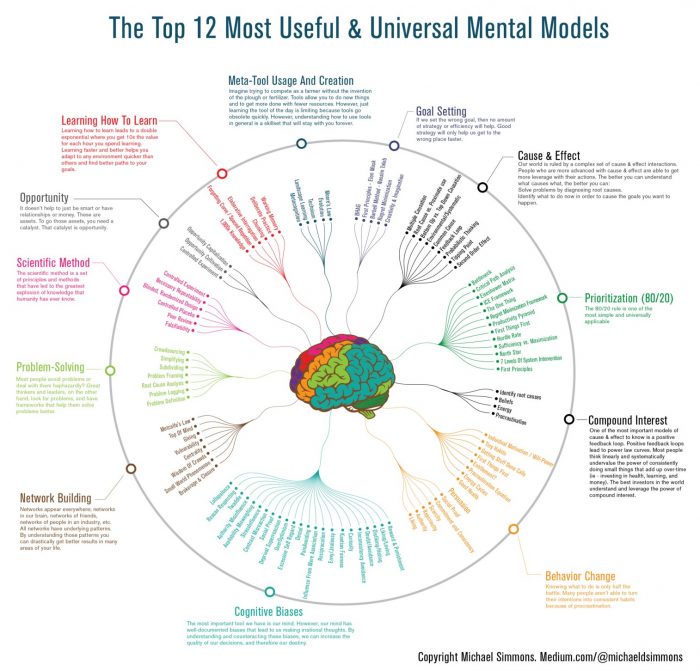
7 Man-Made Engineering Wonders


About The Sundance Company                                                      
Established in 1976, The Sundance Company has the experience to help you with your commercial real estate needs throughout the Boise Valley. If your requirements include property management, leasing, real estate development, project planning, construction or space planning then look to us. The Sundance Company has more than 1.5 million square feet of office and industrial space available in prime locations in the Boise metropolitan area. More information is available at www.sundanceco.com or 208.322.7300.
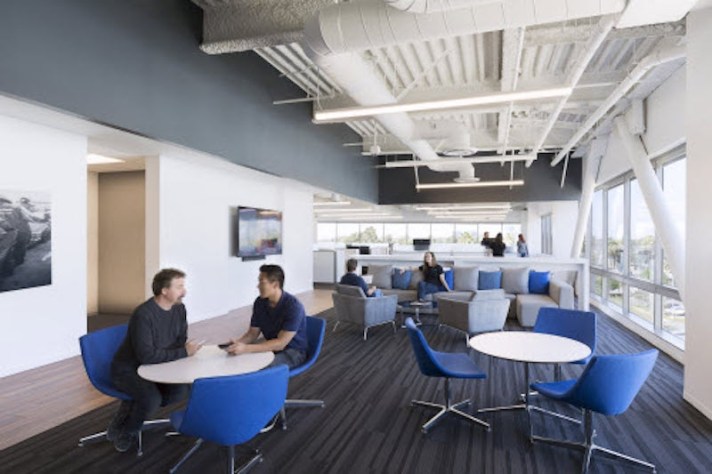
15 Amazing Workplace Design Statistics

Thirty years ago, the majority of workplace communication took place by landline phones and fax machines. Twenty years ago, nearly everyone worked in a sea of cubicles. Ten years ago, forward-thinking leaders were extolling the virtues of collaboration and the open office. Now many are realizing it’s good to have some walls and adopting activity-based working.

It’s safe to say workspaces have changed dramatically over the past few decades.

What can workplace leaders expect in the coming years? To help you make the best decisions for your organization, we rounded up 15 eye-opening statistics that provide insight into the workplace design of the future.

  1. Eighty-five percent of employees say they would like to work remotely at least part of the time. (Global Workplace Analytics Statistics, 2017)
  2. One-half of all American workers hold a job that is compatible with working remotely at least part of the time. (Global Workplace Analytics Statistics, 2017)
  3. Only 3 percent of employees work from home at least half the time, although many more could if their employer permitted it. That’s 3.7 million employees, excluding those who are self-employed. (Global Workplace Analytics Statistics, 2017)
  4. Fifty-five percent of typical employees spend the majority of their time away from their desk. (Global Workplace Analytics Statistics, 2017)

Seven percent of U.S. employers offer flexible workplace options, but that number reflects an increase of 40 percent over the past five years. (Global Workplace Analytics Statistics, 2017)

  1. Ninety-one percent of Americans who worked remotely said they were more productive. (According toMore Evidence Against Open Offices, CEB Global)
  2. Co-working spaces are becoming more common; WeWork had more than 220,000 members in 234 locations as of March 2018. (According to The Numbers Behind WeWork’s Growing Empire)
  3. Up to 40 percent of office space can be vacant at any given time. (2017 Occupancy Benchmarking Report, JLL, 2017)
  4. Of 81 global companies surveyed by JLL, 57 percent said they track space utilization. (2017 Occupancy Benchmarking Report, JLL, 2017)
  5. Only 13 percent of the global workforce is highly engaged and highly satisfied with their workplace. (Steelcase Global Report: Engagement and the Global Workplace)
  6. Eighty-eight percent of highly engaged employees feel they have control over their work experience, while only 14 percent of highly disengaged employees feel the same. (Steelcase Global Report: Engagement and the Global Workplace)
  7. One-third of employees said they considered leaving their jobs because of a negative work environment. (5 Dynamics Organizational Survey: Most Businesses Have a Teamwork Problem)
  8. By 2020, organizations that support a “choose your own workstyle” culture will boost employee retention rates by more than 10 percent. (Measuring Employee Engagement: Past, Present and Future)
  9. Seventy-five percent of employees who work from home earn over $65,000 per year. (Global Workplace Analytics Statistics, 2017)
  10. A typical business would save $11,000 per person per year by offering telework. (Global Workplace Analytics Statistics, 2017)

Based on these statistics, we have three predictions about workplace design in the not-so-far-off future:

  • The open office floor plan will be replaced with activity-based working for a more balanced combination of “me” spaces (cubicles and private spaces), “we” spaces (collaborative areas and conference rooms) and support space (cafeterias, fitness centers and storage).
  • More companies will begin offering telecommuting opportunities — at least part of the time — to reduce energy costs and increase employee satisfaction. This could lead to less space allocated to independent workstations and more space for collaboration.
  • More companies will adopt hot desking or hoteling over dedicated workstations due to the rising costs of real estate and concerns about poor space utilization.

If there’s one word we would use to describe the workplace design of the future, it’s “flexible.” By creating an office environment where employees can choose where they sit (or stand) based on the work they’re doing—and powering it with employee-centric workplace technology—you’ll stay ahead of the curve.

This article originally appeared on the iOffice website.

About The Sundance Company                                                      
Established in 1976, The Sundance Company has the experience to help you with your commercial real estate needs throughout the Boise Valley. If your requirements include property management, leasing, real estate development, project planning, construction or space planning then look to us. The Sundance Company has more than 1.5 million square feet of office and industrial space available in prime locations in the Boise metropolitan area. More information is available at www.sundanceco.com or 208.322.7300.

The Real Cost of Unproductive Meetings

real-cost-of-unproductive-meetings-700x3701

About The Sundance Company                                                      
Established in 1976, The Sundance Company has the experience to help you with your commercial real estate needs throughout the Boise Valley. If your requirements include property management, leasing, real estate development, project planning, construction or space planning then look to us. The Sundance Company has more than 1.5 million square feet of office and industrial space available in prime locations in the Boise metropolitan area. More information is available at www.sundanceco.com or 208.322.7300.

How Technology is Changing the Commercial Real Estate Market

While many industries have stayed current with technology trends and established industry standards, real estate is a notable exception. Perhaps it’s the notable exception when you consider that real estate is the largest commodity in the world, with an estimated $217 trillion valuation.

As someone who has been a real estate investor for more than 20 years, I speak from personal experience when I say that the industry is fragmented and antiquated in numerous ways, with technology being right at the top of that list. Many of the big players are still building and upgrading their proprietary technology solutions. Others are spending a fortune with consultants for customized applications. We’ve all seen this before in other industries — everyone wants to reinvent the wheel. History tells us, however, that wheel reinvention is almost always unnecessary because it creates further fragmentation and ultimately makes industries less competitive.

Time For An Industry-Wide Upgrade

While more technologically mature industries moved away from a restricted-use model a long time ago and embraced an outsourced consumption model (for example, running applications in the cloud via AWS), the real estate industry, for the most part, has not. Among other important reasons, the consumption model is significantly more cost-effective and allows companies to focus on their core businesses and stay ahead of innovation.

Beyond the consumption model and leveraging the cloud, the real estate industry has also been slow to adopt applications that could transform it from slow and inefficient to fast and efficient. The technology is out there, but until now, the desire to migrate from the traditional way of doing things has been sporadic at best.

Here are three technologies that will soon become mainstream in the real estate space:

Virtual reality: One application that is becoming more popular among consumers and businesses and is tailor-made for real estate is virtual reality (VR). Forward-thinking realtors are already moving beyond photos — and even 360-degree video — and offering clients 3D virtual property “tours” right on their devices. There are different levels of 3D aggregators on the market, but they are still in the early days for real estate.

One of the leaders in this category is Matterport, which incorporates photos, videos and VR to allow users to navigate floor plans in a digital manner. The company’s value proposition is making the 3D experience of home tours “immersive.”

The cloud: Another platform with wide-ranging impact takes on the closing process. Anyone who has ever purchased real estate knows what a long, inefficient and frustrating process this is. Now, thanks to the cloud and better data management applications, the entire process can be streamlined for both commercial and residential purchases — right down to electronic signatures. What once took weeks or months can now take just days.

A company that is solving this problem in an innovative way is Private Exchange Australia (PEXA), an online property exchange network. It helps customers like lawyers and financial institutions transfer the required paperwork to the land registries and allow them to complete the financial settlements digitally.

Blockchain: Blockchain gets a lot of attention these days, but a big piece of that is bitcoin and other cryptocurrencies. There’s certainly a place for cryptocurrencies in real estate transactions, but blockchain’s security, transparency and efficiency innovations are what really matter to real estate buyers, sellers and renters. Those are the benefits that will allow the industry to standardize and scale online transactions.

In 2016, the time was right to do something about this innovation gap in the marketplace, so I started ShelterZoom with an experienced real estate professional, Allen Alishahi. There were some other companies in various stages of building blockchain-based solutions in the real estate space, like Imbrex and ATLANT, but we didn’t see anyone attacking the problems the way ShelterZoom now does.

Think about real estate transactions from a buyer or renter perspective: once the offer is made, the process is a mystery. Consumers are not able to transparently track the offer. Many think the sellers/renters or their agents are playing games and being opaque on purpose. That’s troubling when you consider that real estate transactions contain private information like offer terms, Social Security numbers and bank statements.

Is Real Estate Ready For Blockchain?

Of the three technologies mentioned, blockchain is definitely the newest one on the scene. And despite all the hype surrounding it, it’s not the best option for many use cases. This is especially true at the low end of the purchase spectrum: shoes, clothes and everything at Starbucks are not practical use cases for blockchain.

In my experience, at least three criteria out of several should be met for a blockchain use case to make sense:

  • Some type of information exchange between multiple parties is required.
  • Privacy is a critical concern.
  • Tampering by other parties — of facts, evidence, information or terms — is a major issue. This is a common concern in industries that supply high-value items or legal documents like shipping, financial services, legal and government.
  • Reducing administrative costs is a requirement.
  • Transparency, auditability and/or verification are requirements.
  • Data security is paramount.

Real estate fits all of the criteria.

It’s Time

The real estate industry is still in the infancy stage of technology innovation. While we are beginning to see more applications for VR, the cloud and blockchain, these platforms were all just pipe dreams in the real estate world 10 years ago. As the technology continues to become more ubiquitous, you can expect home buying to never be the same again.

This article originally appeared on the Forbes website.

About The Sundance Company                                                      
Established in 1976, The Sundance Company has the experience to help you with your commercial real estate needs throughout the Boise Valley. If your requirements include property management, leasing, real estate development, project planning, construction or space planning then look to us. The Sundance Company has more than 1.5 million square feet of office and industrial space available in prime locations in the Boise metropolitan area. More information is available at www.sundanceco.com or 208.322.7300.
How to Make Each Day as Productive as Possible

mentat-productivity-infographic-20-700x3577

About The Sundance Company                                                      
Established in 1976, The Sundance Company has the experience to help you with your commercial real estate needs throughout the Boise Valley. If your requirements include property management, leasing, real estate development, project planning, construction or space planning then look to us. The Sundance Company has more than 1.5 million square feet of office and industrial space available in prime locations in the Boise metropolitan area. More information is available at www.sundanceco.com or 208.322.7300.

The Beautiful Impact of Biophilic Design

As we move towards a future of driverless cars, shrinking parking lots, and smart, connected buildings, there’s another quiet trend taking root: biophilic city planning and building design.

Biophilic design is bringing nature back into urban areas, balancing all that concrete and steel with more living plants, water, sunlight, and natural materials. It’s a way planners and architects are making public and private spaces a little bit wilder, greener, and healthier for the people who use them. Today, the trend is getting a high-profile boost from major tech companies who’ve incorporated it into their office designs, from Microsoft’s treehouses to Apple’s orchards.

If you’ve noticed green roofs, waterfall features, living plant walls and green courtyards springing up in your area, those are all examples of biophilic design in action! Some stunning examples of biophilic design taking root across cities, offices, and residential buildings around the world include:

  • World’s tallest vertical garden in Sydney. Sydney’sOne Central Park residential towers boast a gorgeous green facade that rises more than 500 feet into the sky and is punctuated by lush terraced gardens. Its two urban towers incorporate 250 species of plants and flowers native to Australia and create a lush, nature-inspired landscape for its many occupants.
  • Amazon’s cloud forest “Spheres” in Seattle. Here’s a breathtaking example of how beautiful biophilic office design can be. Just this year, Amazon opened its $4-billion Spheresworkspace, a set of futuristic glass orbs that house over 40,000 plants and feel “more like a tropical rainforest in the clouds than an office,” says the company.
  • A rainforest-like hospital in Singapore. TheKhoo Teck Puat Hospital in Singapore is a celebration of biophilic building design, bringing the lush flora and fauna of the rainforest to a hospital setting. Its verdant courtyards, roofs, terraced gardens, and sky bridges are home to several species of butterflies, birds, fish, and fragrant plants.
  • Etsy’s Living Building Challenge-inspired Brooklyn headquarters. With its new headquarters in Brooklyn, Etsy took up the challenge of meeting the International Living Future Institute’sLive Building Challenge, which not only embraces green principles like water and energy efficiency, but encourages biophilic design elements that promote physical and psychological health. Etsy’s verdant rooftop terraces, nontoxic and local building materials, zero-waste initiatives, and tranquil work and wellness areas are all ways they’re rising to the challenge.
  • “Pocket parks” integrated into tight city spaces. Midtown Manhattan’sPaley Park is a testament to how powerful nature can be, even in tiny doses. Despite its tight quarters, the little park has carved out an oasis of calm in a busy city. Parks like these don’t have to be a destination in themselves to be appealing—even simple elements like a small canopy of green or a waterfall feature are all it takes to make even the busiest city seem more serene.

All this green popping up in urban spaces should be good news for people and businesses alike. There’s research to suggest that green office design can boost productivity as well as well-being, and that natural elements and sunlight boost job satisfaction while also decreasing depression and anxiety. One study even suggests that people in nature-inspired environments are 6% more productive and 15% more creative.

What’s perhaps more interesting is just how much people seem to crave and appreciate these environments. The study above discovered that design is so important to people that 33% of the 7,600 office workers surveyed said they’d use it to decide whether or not to work somewhere!

That’s significant, considering that 47% of people participating in the study said they had no natural light at work, and 58% had no plant life. Clearly, there is an opportunity here for businesses to embrace biophilic design principles—and luckily, some very high-profile companies are already setting an example for others to follow. This is definitely a trend to watch in the coming years!

This article originally appeared on the Apto website.

About The Sundance Company                                                      
Established in 1976, The Sundance Company has the experience to help you with your commercial real estate needs throughout the Boise Valley. If your requirements include property management, leasing, real estate development, project planning, construction or space planning then look to us. The Sundance Company has more than 1.5 million square feet of office and industrial space available in prime locations in the Boise metropolitan area. More information is available at www.sundanceco.com or 208.322.7300.

How Billions of Online Objects are Making the Web Wiser

About The Sundance Company                                                      
Established in 1976, The Sundance Company has the experience to help you with your commercial real estate needs throughout the Boise Valley. If your requirements include property management, leasing, real estate development, project planning, construction or space planning then look to us. The Sundance Company has more than 1.5 million square feet of office and industrial space available in prime locations in the Boise metropolitan area. More information is available at www.sundanceco.com or 208.322.7300.