How Much You’ll Need to Run to Offset Thanksgiving Meals


About The Sundance Company
Established in 1976, The Sundance Company has the experience to help you with your commercial real estate needs throughout the Boise Valley. If your requirements include property management, leasing, real estate development, project planning, construction or space planning then look to us. The Sundance Company has more than 1.5 million square feet of office and industrial space available in prime locations in the Boise metropolitan area. More information is available at www.sundanceco.com or 208.322.7300.

The Peak Time of Day for Everything You Do

About The Sundance Company
Established in 1976, The Sundance Company has the experience to help you with your commercial real estate needs throughout the Boise Valley. If your requirements include property management, leasing, real estate development, project planning, construction or space planning then look to us. The Sundance Company has more than 1.5 million square feet of office and industrial space available in prime locations in the Boise metropolitan area. More information is available at www.sundanceco.com or 208.322.7300.

Use Your Seat to Get Ahead at Work

Want to boost your performance at work?

Pick out a colleague who is really good in an area where you want to improve—and move your desk next to him or her.

Proximity to high achievers can lift people’s performance in various jobs, via inspiration, peer pressure or new learning, a growing body of research shows. The findings offer a silver lining to anyone annoyed at the current fad of flexible office-seating arrangements; employees can use them to their advantage.

Simply sitting next to a high achiever can improve someone’s performance by 3% to 16%, according to a two-year Northwestern University study of 2,452 help-desk and other client-service workers at a technology company.

The study is the first to tease apart different aspects of performance in an office job and analyze spillover in each. Productive employees—those who finished tasks quickly—raised the output of slower colleagues by 8%. Effective employees, who could handle customers’ problems without referring them to co-workers to finish, lifted their neighbors’ effectiveness by 16%. Quality workers, who received high ratings on customer surveys, inspired 3% improvements in colleagues’ quality ratings, says the study, published last year by the Harvard Business School. Researchers analyzed data from personnel files, seating-arrangement reports, task-tracking software and customer-satisfaction surveys in several U.S. and European offices of the company.

Lead author Dylan Minor sees a combination of inspiration and peer pressure at work. He compares it to the impact of a charismatic leader. Also, high performers weren’t dragged down by low achievers nearby, says Dr. Minor, an assistant professor of managerial economics at Northwestern University’s Kellogg School.

For skills that have no upper limits, such as creativity, sitting elbow-to-elbow with a star may spark bigger gains, Dr. Minor says. People who are working from home or on the road might find a Starbucks and surround themselves with caffeinated high achievers.

When Hoon Oh was hired last year as a creative director in the Philadelphia offices of the ad agency Allen & Gerritsen, “we started riffing off each other’s thinking” right away, says Hilary Sedgwick, who is also a creative director. Mr. Oh and Ms. Sedgwick were seated across the office at first but soon slid their desks together. Their boss Jennifer Putnam, chief creative officer for the Boston-based agency, says both are passionate about their work, and “they’re teaching that to each other and teaching that to the team.”

Jobvite, a San Mateo, Calif., recruiting-software company, often seats new employees next to a high achiever. “It’s a form of orientation,” says CEO Dan Finnigan. He has noticed engineers gravitating toward their strongest co-workers, or those with the freshest skills. “You can pretty quickly figure out who’s got the extra juice, or the greatest insight. People are drawn to it. You can almost see the pathways on the floor,” Mr. Finnigan says.

David Blacker seated a new hire near his desk on a recruiting team he led at a previous employer. Within a month, “I started to hear my words coming out of her mouth” as she built his techniques into her own interviews, says Mr. Blacker, managing principal of Venerate Media Group, a digital-marketing company in Tampa, Fla.

Weak teachers whose colleagues teaching the same grade in the same school were highly skilled posted sharper gains in students’ math and reading test scores, compared with those surrounded by weaker colleagues, says a 2009 study of 11 years of test data on third- and fifth-grade students and teachers at 1,545 North Carolina schools. The weak teachers may have learned by watching their peers, or been inspired by them to get more training, the study says.

Newcomers to a high-performing team also can pick up good work habits, such as meeting deadlines and listening carefully, says Marc Landsberg, CEO of the Chicago social media agency Social Deviant. When teammates’ cubicles adjoin each other, “those pods take on tribal effects” that can have a big impact, positive or negative, on the whole team, he says.

There are some catches. In sales, people can benefit from being teamed with star performers, says a 2014 study at Washington University in St. Louis —but only if their pay is based on overall team performance. When top salespeople at department-store cosmetics counters were paid based on their team’s results, they helped less-skilled teammates by handing off loyal customers and turning their skills to luring new clients. Low performers suffered when pay was based on individual sales, however: Stars kept loyal customers for themselves and discounted prices to pump up their own sales.

Working under a colleague’s watchful eye can be especially potent. Supermarket cashiers who worked where star co-workers could see them posted performance gains, says a 2009 study of 370 cashiers in six stores. They may have been afraid their high-performing colleagues would ostracize them or report them to the boss, or they may simply have wanted to be liked, according to the two-year study, which was led by Alexandre Mas, a professor of economics and public affairs at Princeton University.

This article originally appeared on the Wall Street Journal website.

About The Sundance Company
Established in 1976, The Sundance Company has the experience to help you with your commercial real estate needs throughout the Boise Valley. If your requirements include property management, leasing, real estate development, project planning, construction or space planning then look to us. The Sundance Company has more than 1.5 million square feet of office and industrial space available in prime locations in the Boise metropolitan area. More information is available at www.sundanceco.com or 208.322.7300.

Tips on How to Deal with a Noisy Office

With the rise of the open office has come the rise of what I’ll call the open office symphony: the consistent click-clack of a colleague who types a little bit too aggressively, the boisterous yammer of loud talkers, and intermittent laughs about something on Slack or Twitter or YouTube.

While I’m sure most of your coworkers are respectful and only err in their ways momentarily (hey, I’m guilty of the offenses myself), the din can make it difficult not just to focus, but also to hold meetings and collaborate. But the right design and problem-solving products can help. We spoke to four architects at firms that have designed offices for HBO, Uber, LinkedIn, and Nike about their tricks of the trade.

Buy Your Way Out of the Problem

The easiest way to block noise is to introduce physical barriers. Softer tactile surfaces can “trap” sound and reduce how much sound is reflected, and in turn, how disruptive noise is. This doesn’t mean building a fort out of heavy drapery. Designers have gotten pretty good at making acoustic panels very attractive, like Baux’s patterned acoustic tiles, FilzFelt’s natural felt panels, and Carnegie’s Xorel Artform panels. Certain textiles can even block sound while allowing for visual transparency, like Designtex’s Acoustic Sheers. Even lighting can be found in sound-absorbing iterations, like BuzziSpace’s BuzziPleat lamp.

“A key question we ask per project is whether to celebrate the material as a design move with interesting color or texture, or whether we want the material to disappear and just reduce the movement of sound through a space without calling attention to itself,” says Patrick Bradley, a Project Architect at Studio O+A who has worked on offices for Nike and Yelp, among others. Some of his favorite moves? Arktura acoustical baffles for sculptural effects; K-13 spray-on cellulose that has “remarkable absorptive properties make the work space feel like the inside of a cloud,” he says; and fully upholstered seating nooks.

There’s an old saying that an ounce of prevention is worth a pound of cure. When it comes to work-space noise, freestanding phone booths, like Jabbrrbox’s pods, and meeting rooms, like Steelcase’s Irys pod, can isolate noxious noise before it permeates an entire office.

Architect Your Way Into Silence

Most interior designers and architects would argue that the surefire way to reduce noise is to work with a professional to come up with a tailored solution for an office (hey, that’s what experts are for).

Denise Cherry, cofounder of the San Francisco firm Assembly Design, says acoustics have become a top priority for her clients, regardless of budget or scale. In years past, designing for noise was considered a luxury. While the woes of open offices are some of the most common complaints, she advises that sound transfer between conference rooms is an overlooked, but important, consideration. “If you can hear the conversation in the conference room next to you, you know they can hear yours,” she says. “And if you don’t feel safe to have a confidential conversation, it’s difficult to trust your work space.”

Her preferred noise-mitigating solutions? “Ones that are hiding in plain sight,” she says. “Wood ceilings with micro-perforations to deaden noise, felted or fabric wrapped surfaces that blend with their surroundings, or acoustic plaster, a material so subtle it essentially looks like drywall.”

David Holt–a design director at IA: Interior Architects and a senior associate at the firm, which counts LinkedIn, Bacardi, and Dyson as clients–says that the most effective strategy is to understand adjacency and how to organize people effectively. Seating heads-down, high-focus people away from more social and informal groups is key. But for spaces that are tight to begin with, high-back furniture can help create some division.

“Two wingback-style chairs facing each other are remarkably effective for a semi-private conversation,” Holt says. “It gets the acoustic absorption right where you need it, provides a bit of visual privacy, and the seating solution and the acoustic solution move together, for added flexibility.”

David Galullo–CEO and chief creative officer of Rapt Studio, a firm that designed for HBO and Dropbox–has noticed that his clients have accepted higher noise levels in open offices, but there’s still a need for privacy and quiet. His solution? Choice.

“Our strategies are less about minimization and more about offering a range of options for the level of distraction that is acceptable for specific tasks,” he tells Co.Design. “The mix of focus rooms, spaces that are programmed as quiet spaces, and various task-focused spaces built around a client’s individual processes are really the go-to strategy.”

One of Patrick Bradley’s go-to moves in designing offices is to divide an open-plan space into smaller sections. “Often we will break down what could otherwise feel like an open sea of workstations with screening partitions, or packs of new built rooms, to create smaller ‘neighborhoods’ of workstations,” he says. “Not only does this make you feel like you’re working in a smaller group situation, but it also offers your neighborhood some great breakaway opportunities right nearby.”

Add Noise (Hear Us Out!)

A light hum of activity can mask some of the more intrusive noises in an office–like a phone call–and can actually make work spaces nicer to inhabit.

“If it’s the kind of client where it’s a good cultural and practical fit, music playing at the right level does a good job of masking phone conversations and provides some mood and ambiance,” Holt says. “It’s a nice way to engage more senses in the design.”

For that, Bang & Olufsen has the BeoSound Shape, a modular wall-mounted audio system that dampens sound when it’s off. It’s really an architectural product more than just speakers: the ridged, fabric-covered units trap and muffle sound waves.

Galullo points out that there’s “no one size fits all” solution to noise, and it all depends on the culture of a space. Some companies swear by headphones, others frown upon them since they impede communication. What it boils down to is figuring out what people want. “When [I] asked where a young client goes for privacy, the response was ‘Starbucks,’ which is not unique,” Galullo says. “This, in itself is an example of the acceptance of ‘noise’ as a given, but redefines the word ‘privacy.’”

This article originally appeared on the Co.Design website.

About The Sundance Company
Established in 1976, The Sundance Company has the experience to help you with your commercial real estate needs throughout the Boise Valley. If your requirements include property management, leasing, real estate development, project planning, construction or space planning then look to us. The Sundance Company has more than 1.5 million square feet of office and industrial space available in prime locations in the Boise metropolitan area. More information is available at www.sundanceco.com or 208.322.7300.

How To Be Productive

About The Sundance Company
Established in 1976, The Sundance Company has the experience to help you with your commercial real estate needs throughout the Boise Valley. If your requirements include property management, leasing, real estate development, project planning, construction or space planning then look to us. The Sundance Company has more than 1.5 million square feet of office and industrial space available in prime locations in the Boise metropolitan area. More information is available at www.sundanceco.com or 208.322.7300.

The Top 10 Things Employees Want in Their Office

Competition for top talent is fierce. As it becomes increasingly more challenging to recruit and retain talented employees, companies are getting creative and turning to workplace design as a solution.

But do you know what your employees want in the workplace? Leesman, a private company that collects workplace data, has been analyzing the answer to that question from more than 250,000 respondents. As an architect who has worked on many office spaces throughout my 20-year career, I find the results to be fascinating.

Here are the top 10 physical and service features that employees considered to be most important in the workplace, in order of preference:

  1. Functional desk

As technology has evolved throughout the years, desks have followed suit. Sit-stand desks are popular among employees, and the most-requested desk type I get from clients. In recent years, sit-stand desks have become more cost-effective and companies looking to convert traditional desks can do so for between $600 and $900 each, an investment that’s in line with other higher-end desk types. Soon, we’ll be waving goodbye to large corner work surfaces that previously housed oversized computer monitors.

  1. Comfortable chair

Given the amount of time your employees spend in their chairs, this should be a top priority. After all, ergonomics can dramatically increase comfort and productivity, help to improve posture, and reduce health risks. Investing in good seating is an investment in the health of your employees.

  1. Tea, coffee, and other refreshment facilities

Eighty-five percent of employees surveyed want this. During an interview with a company’s leader, I learned that he purchases coffee for his team, and makes it for them. There are so many great coffee-and-tea options available (along with some pretty cool office coffee bars to dream about) that this should be a no-brainer. A coffee or café bar can be a wonderful addition to any office, and encourages workers to fuel up throughout the day.

  1. General cleanliness

Bacteria can be found anywhere, especially where food is stored, prepared and eaten. But how often do you wipe down and clean your desk? Many employees eat at their desks, yet every cleaning crew follows cleaning limits. Check out what your crew’s limits are, and fill in the gaps to prevent germs from spreading throughout the workplace. Your employees will notice.

  1. Temperature control

This is probably the hardest to control because user preferences vary. One person may feel great with 76 degrees, but another may prefer 66. The most effective way to make this work is to go “free address,” in which employees are free to move to the area of the building with the most comfortable temperature for them.

  1. Small meeting rooms

The open office has brought to the forefront the importance of small collaboration spaces. With more employees connecting through task orientation, the demand for concentration space and small rooms for impromptu meetings is on the rise. Function is key when creating various small meeting spaces, and employers that don’t adapt are putting employee satisfaction at stake.

  1. Restroom privacy

This is an area that can improve employee comfort several times throughout the day. I have seen an increase in requests for walls dividing toilet spaces, not just a flimsy panel with no acoustical privacy. This takes more space to achieve; but if your restrooms are due for a remodel, it’s worth seeing if this change can be made. Also, adding in a few amenities, such as mouthwash, mints, and toothpicks, adds a nice touch.

  1. Functional printing, copying and scanning equipment

Equipment needed to do your job is typically a given, so much so that 78 percent of employees surveyed put this on the list. Nonworking or outdated equipment not only frustrates employees but can also negatively affect efficiency and productivity, a reason why many businesses today are investing in office equipment that helps them successfully operate with ease.

  1. Natural light

As a WELL Accredited Professional, this makes me smile. Natural light is of primary importance to the health and wellbeing of every person on the planet. According to the World Green Building Council, employees working near sunlit windows have a 15 percent higher production rate, so it’s great to see employees taking note and listing this as a most-wanted feature.

  1. Nearby restaurant or canteen

Food options in close proximity to work round out the top 10 list of must-have features. If nearby parking is an issue for your building, reasonable walking distance to restaurants is even more important. Other options are food trucks plus pop-up catering and delivery from restaurants out of walking range.

Now it’s up to you to evaluate where your own workplace falls on the employees’ top-10 list. I always recommend that companies have their employees surveyed by an outside firm or conduct their own focus groups to see where they stand. Workplaces that strive to provide the features their employees want benefit the most in attracting and retaining a loyal workforce.

This article originally appeared on the Inc. website.

About The Sundance Company
Established in 1976, The Sundance Company has the experience to help you with your commercial real estate needs throughout the Boise Valley. If your requirements include property management, leasing, real estate development, project planning, construction or space planning then look to us. The Sundance Company has more than 1.5 million square feet of office and industrial space available in prime locations in the Boise metropolitan area. More information is available at www.sundanceco.com or 208.322.7300.

Which Birth Dates Are Most Common?

About The Sundance Company
Established in 1976, The Sundance Company has the experience to help you with your commercial real estate needs throughout the Boise Valley. If your requirements include property management, leasing, real estate development, project planning, construction or space planning then look to us. The Sundance Company has more than 1.5 million square feet of office and industrial space available in prime locations in the Boise metropolitan area. More information is available at www.sundanceco.com or 208.322.7300.
Are Open Floor Plans Killing Productivity in Your Office?

A few weeks ago, some colleagues and I were invited to a meeting held in a state-of-the-art conference room at a popular co-working space in Lower Manhattan. As we walked through the open floor plan of the co-working space, one of my colleagues–the CEO of a large technology company–turns to us and asks, “How does anyone get any work done here?”

We looked around to see people chatting, typing, and conducting phone meetings. The environment was busy and noisy and anyone trying to focus on the task at hand could easily get distracted.

And therein lies the problem.

When the open office trend took off a few years ago, it heralded a new era of collaboration. The wall-less environments would revolutionize the way we work, promote teamwork, and foster a culture of innovation. Businesses jumped on the bandwagon and tore down cubicle walls faster than the main character does in the movie Office Space.

But, as the popularity of this new way of office life surged, so did the studies. According to the Journal of Environmental Psychology, noise and privacy loss was associated as the main source of workspace dissatisfaction and the “benefits of enhanced interaction didn’t offset disadvantages in open-plan offices.” Another study, conducted by the Asia-Pacific Journal of Health Management, suggested that this type of floor plan produces an increase in noise, conflict, stress, and turnover. From a personal perspective, I’ve heard stories of managers and executives ducking into stairwells and closets to take confidential calls and/or conduct critical meetings.

As it turns out, the open office life isn’t the end-all be-all solution we once thought it was. So, how do we course correct and improve productivity? Here are a few ideas:

Find out what works best for your employees

A diverse workforce comes with a diverse set of needs. Not every single employee will thrive in a bustling environment or have the capacity to “tune out” the noise. You might discover that a particular group or department performs better when they have quiet places to work or a private area to conduct meetings. Environment preferences depend on your employees and the type of work they are trying to accomplish.

Regularly check in with your staff to find out which type of environments they work best in or what they need to do their job. You can then create an atmosphere that best fits their needs.

Strike a balance

While open offices might not be a one-size-fits-all solution, the opposite comes with disadvantages as well. Many companies today are looking into hybrid approach–a blend of open spaces and private areas for employees to use as needed.

Fortune suggests that the next generation of office floor plans will cater to this balanced approach. A hybrid office will combine “private offices, cubicle banks and truly open floor plans (in which even cubicle dividers are dismantled) as well as communal areas and soundproof rooms where employees can go to concentrate on solo work.”

Going mobile

While the hybrid solution is a viable compromise, this approach to office life is missing one major component: the mobile worker.

The Digital Age has made it easy for workers to be productive on the go–they can access files, chat with coworkers, and even participate in meetings wherever they get mobile reception or Wi-Fi.

So, instead of sinking a ton of remodeling resources into the physical office space, determine how you can make it easier for your workforce to be productive anywhere in the world. Some suggestions on how to do this would include:

  • Provide employees with portable Wi-Fi hotspots
  • Create a practical cloud-based infrastructure with the right apps to support the business
  • Invest in new tech like VR in order to conduct virtual prototype meetings
  • Ban paper use in the office

The key here is to make it easier for employees to get things done when and where they need to–whether that’s by making documents accessible via the cloud or investing in an online collaboration tool that allows employees to easily connect regardless of location.

This, of course, brings up the debate on working from home. IBM once boasted about their company’s ability to let employees work remotely–only to recently call them all back into the office. The reason? The company released a statement saying, “In many fields, such as software development and digital marketing, the nature of work is changing, which requires new ways of working. We are bringing small, self-directed, agile teams in these fields together.”

So, it’s not a one-size-fits-all solution with mobile enablement, either. Which brings me to my next point: the omni office approach.

Introducing the omni office approach

At Centric Digital, we often recommend that our clients provide customers with an omni channel approach. This digital strategy consists of a cross-channel business model that companies use to improve their customer experience. The result is a seamless experience whether a customer is on the company website or physically in a brick-and-mortar store.

Similar to this customer-facing digital strategy, smart businesses should consider introducing the omni office approach to employees. This strategy would encompass everything mentioned above: employee preferences, a hybrid physical environment, and the ability to work on the go. As the business world becomes more digital, the omni office approach would allow companies to remain flexible, while providing workers with a seamless office experience.

Of course, in order for this to approach to succeed, you’d need to work closely with management to ensure they are enabling employees to work how and where they are most productive. Sometimes that might mean a day or two working from home, but it is up to the manager to discern what will work best for the employee. If a role requires the physical presence of an employee in the office or if a particular employee seems distracted when working from home, then the manager needs to adjust the approach as needed. Flexibility is key.

Final word

While it’s becoming apparent that the open office environment is posing legitimate threats to productivity and healthy stress levels, the current proposed solutions seem to be lacking digital foresight. The solution is to not shoehorn one approach and claim it is better than the others. Instead, we must be conscious of the changes in today’s business world and ensure we are adapting with the changing needs of our employees.

This article originally appeared on the Inc.com website.

About The Sundance Company
Established in 1976, The Sundance Company has the experience to help you with your commercial real estate needs throughout the Boise Valley. If your requirements include property management, leasing, real estate development, project planning, construction or space planning then look to us. The Sundance Company has more than 1.5 million square feet of office and industrial space available in prime locations in the Boise metropolitan area. More information is available at www.sundanceco.com or 208.322.7300.


How the Average Working Adult Spends Their Days

About The Sundance Company
Established in 1976, The Sundance Company has the experience to help you with your commercial real estate needs throughout the Boise Valley. If your requirements include property management, leasing, real estate development, project planning, construction or space planning then look to us. The Sundance Company has more than 1.5 million square feet of office and industrial space available in prime locations in the Boise metropolitan area. More information is available at www.sundanceco.com or 208.322.7300.


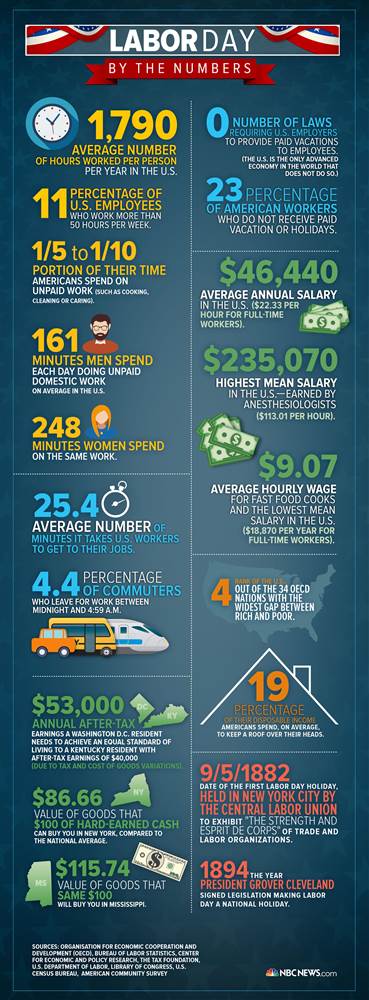
Happy Labor Day 2017

About The Sundance Company
Established in 1976, The Sundance Company has the experience to help you with your commercial real estate needs throughout the Boise Valley. If your requirements include property management, leasing, real estate development, project planning, construction or space planning then look to us. The Sundance Company has more than 1.5 million square feet of office and industrial space available in prime locations in the Boise metropolitan area. More information is available at www.sundanceco.com or 208.322.7300.