Five Ways Drones are Changing Real Estate

It seems that every commercial, office or ranch property is marketed with a beautiful video collected by flying a drone. Changes to Federal Aviation Administration flight rules, increased affordability and simpler data processing make drones more affordable than ever. There’s so much more that can be done than simple videos – a world of new possibilities that many companies are yet to discover.

No longer just for video shoots

The digital imagery and pictures captured by drones offer much more than panoramic video footage. Today’s drones come with GPS, autopilot facilities, flightpath planning software, distance sensing and simple-to-use data processing applications. Recreational drones typically use remote control joysticks where the operator controls all the movements. Commercial-use drones, and increasingly mid-price drones, have automated flight planning tools which use GPS and waypoints to define specific drone paths, heights and camera views. Even novices can program drones to fly specific routes taking hundreds or thousands of photographs and/or video which has hundreds of applications across many industries.

Here’s the top 5 ways drones are changing real estate:

  1. Better maps and immersive 3D scenes
    Drones capture images at very high resolution compared to aerial survey and satellites. For low level flights an individual pixel could be measuring an area as small as one inch square or less; many times more accurate than other sources. Using only still imagery and GPS data, analysis software can stitch the photos together to produce full color, photo realistic 3D datasets that provide immersive visualization and powerful analytics. You get a video game-like visualization experience that allows the viewer to fly around the model, exploring any part of it from any angle and the ability to measure any part of it.The same data also produces 2D maps that can be superimposed on existing views, allowing organizations and individuals to get the most up-to-date and accurate view of the real world on demand.
  1. Site planning, modeling, and survey
    Drone flight post processing and mapping software lets operators calculate lengths, heights, areas and volumes without resorting to expensive and complicated ground surveys. A drone with suitable cameras, can survey a building or site in under an hour producing a terrain surface from which you can calculate and measure cut and fill volumes, slopes and aspect. This lets you estimate potential engineer work requirements and costs and see the impact using the same 3D visualizations described above.Drone surveys can even detect hidden landscape features which are not obvious on the ground due to vegetation or ground cover. In the image below the walls of an abandoned building can be seen which were not visible on the ground due to unmown grass. Drones can also cover more ground than a survey, easily capturing nearby features and surveying hard to access features like streams and culverts.
  1. Safer and remote inspections
    Inspecting roofs, warehouses, industrial building, bridges and other assets can be a difficult and dangerous task. Many risk their lives every day to perform roof and building inspections.Why not send a drone to take pictures instead? Autonomous drones let you plan and control the images collected so you can see the assets from all angles and distances, especially in situations that are too risky to get to in person.

    Thermal cameras and other sensors let you look at how separate parts of a building gather and shed heat during the day and a night. Differences show up as variation in color identifying places that are losing heat, potentially due to inadequate insulation, or are colder. Nighttime and early morning surveys can easily be conducted by drones without endangering lives. Scheduling regular inspections using the same flightpath will identify wear and tear, highlight change and help with preventative maintenance.

  1. Security and protection
    Many companies rely on physical, electronic and human security protection. Not only can drones go where humans can’t but they can do it more consistently, in any weather condition, any time of day or night. The same cameras which are used for inspection can provide real-time security monitoring and improved coverage. Drones can be continually scheduled to patrol the skies above and around buildings while the operators remain safe and at a distance. Thermal cameras provide coverage in the dark, rain or fog and change detection analysis can show differences between two flights, highlighting potential security breaches or risks.
  2. Indoors and more
    Small drones are now flying indoors. They deliver similar inspection and security services as their big brothers outside. Indoor drones can provide 360-degree monitoring, cover areas that security cameras cannot and can easily be tasked with different roles at different times of the day or year. Thermal cameras, change detection, surveys and volumetric monitoring have applications as broad as compliance and security, to theft prevention, health and safety and stock control.

Real applications, right now
The full impact of the drones is only just beginning to be recognized. Improved simplicity and sophistication in both the drones and supporting software are providing huge improvements in the usability and usefulness of drones. Behind the hype of package delivery and flying warehouses are simple applications that are driving real innovation and financial benefit – from improved building security and reliability to keeping staff safe.

This story originally appeared on the BizJournals website.

About The Sundance Company
Established in 1976, The Sundance Company has the experience to help you with your commercial real estate needs throughout the Boise Valley. If your requirements include property management, leasing, real estate development, project planning, construction or space planning then look to us. The Sundance Company has more than 1.5 million square feet of office and industrial space available in prime locations in the Boise metropolitan area. More information is available at www.sundanceco.com or 208.322.7300.

Optical Illusions: How Our Eyes Play Tricks on Your Mind

animated-gifographic-optical-illusions-how-our-eyes-trick-our-mind_5582caac8d065

About The Sundance Company
Established in 1976, The Sundance Company has the experience to help you with your commercial real estate needs throughout the Boise Valley. If your requirements include property management, leasing, real estate development, project planning, construction or space planning then look to us. The Sundance Company has more than 1.5 million square feet of office and industrial space available in prime locations in the Boise metropolitan area. More information is available at www.sundanceco.com or 208.322.7300.
Adapting to the Future of Work

Digital technology is having a profound effect on the human side of the enterprise, affecting where, when, and how employees get work done. The results of Deloitte’s recent Future of Work survey confirm that C-level executives view the ways in which new technologies will shape their organizations and their own roles as a topic of critical importance. Nearly two-thirds (65 percent) of those surveyed say it is a strategic objective to transform their organization’s culture with a focus on increasing connectivity, communication, and collaboration.

Even as more business functions are augmented by new technology capabilities, people remain the most critical asset of an organization. Going forward, those people will be working in a more networked, distributed, mobile, collaborative, and real-time fluid manner. Such significant shifts will demand not only increased adaptability on the part of employees, but deliberate forethought from CIOs and other executives introducing new systems and processes to make sure the transition goes smoothly. Forward-thinking CIOs will ensure that work, increasingly done by human and machine in concert, is coordinated to create maximum value for the company and its employees.

When approached with consideration to the impact on work and workers, digital technologies offer the opportunity to create a more engaging environment for employees and a more adaptive organization for the future. The survey offers a glimpse of what executives expect this future to look like as well as six lessons for CIOs who will usher in the technologies to enable new ways of working and also manage the changes within their own talent organizations.

Pay attention to culture. More than two-thirds (69 percent) of those surveyed believe company culture will be critically important to their organization’s ability to realize its vision in the future. The larger the company, the more important this issue becomes. Just 14 percent of those who responded say that culture has no, little, or neutral impact on their ability to realize their vision and mission—and the majority of respondents were from smaller companies.

Developing a common mission and a sense of belonging in a workforce that is increasingly dispersed will grow ever more important. Just 14 percent of leaders say they are completely satisfied with their organization’s current ability to communicate and collaborate. CIOs and other executives who want to achieve the full value of digital transformations will pay close attention to the development and dissemination of communication around workplace changes. Putting in place more efficient decision-making structures and tools (42 percent) and allocating more employee time and resources to innovation by making current processes more efficient (41 percent) are the two most important changes respondents expect to make within the next two years.

Increase transparency. About three in five (59 percent) corporate leaders say transparency in communications is a critical priority for achieving their organization’s goals. Involving employees in technology-enabled changes will be more challenging than in the past. After all, 37 percent of the global workforce is mobile, 30 percent of full-time employees now do most of their work outside of their employers’ location, and 20 percent of the workforce comprises temporary workers, contractors, and freelancers, according to another Deloitte report. More clarity and openness around the exploration and introduction of digital technologies will help employees adapt to significant and more frequent shifts in their roles.

Manage generational expectations. By 2020, millennials will make up half of the workforce. However, individuals are also more commonly working into their 70s and 80s. As leaders manage a workforce comprising up to four different cohorts, managing across generations will be more important than ever. Nearly four in five (78 percent) executives say generational differences in employees’ expectations will drive an increased emphasis on devolved collaboration, whereby ownership of decisions is delegated down through the organization. The key will be building an environment that supports flexibility and tools that enable all employees to collaborate and exchange ideas easily and transparently.

Measure the business impact. The strategic importance of transforming collaboration and communication is based on the assumption that such advances will yield hard business results in an increasingly competitive, interconnected, and fast-moving world. The biggest benefits executives expect to derive from improved collaboration and communication include identifying and exploiting new business opportunities and increasing rates of innovation (see figure below).

CIOs and others spearheading the digital transformation of work can identify the specific business benefits their organizations are targeting and regularly measure. They can then report on key indicators associated with those goals, making adjustments to strategy as required based on performance.

Create context. The way we work in five years may look little like it does today. For example, 76 percent of executives surveyed predict their organizations will move away from email and toward more sophisticated collaboration tools. Nearly three quarters (72 percent) expect a significant increase in cross-cultural virtual teaming technologies. And around 8 in 10 (78 percent) think mobile will be the dominant technology environment within five years.

But new tools alone are not enough. The time that workers spend today answering email (an average of 25 percent of the day) or checking their mobile phones (around 150 times a day) is not necessarily increasing productivity. As leaders sit on the cusp of potentially more sweeping technology-enabled changes, they can take this time to develop the right cultural context for these new tools and adapt their workplace processes and policies to make the most of digital capabilities on the way.

Build networks, not hierarchies. More than 40 percent of respondents expect to place more focus on facilitating the exchange of ideas, enabling the flow of conversations across the organization, and providing greater autonomy at team and individual levels going forward. This shift from a “top-down” to “side-by-side” organizational construct will be a critical component to the future of work. CIOs will play an important role, enabling an empowered network of employees capable of acting autonomously rather than waiting for direction.

This story originally appeared on the Deloitte/WSJ website.

About The Sundance Company
Established in 1976, The Sundance Company has the experience to help you with your commercial real estate needs throughout the Boise Valley. If your requirements include property management, leasing, real estate development, project planning, construction or space planning then look to us. The Sundance Company has more than 1.5 million square feet of office and industrial space available in prime locations in the Boise metropolitan area. More information is available at www.sundanceco.com or 208.322.7300.

 

Memorial Day 2017 Travel Forecast

AAA announced its projection that 39.3 million Americans will travel 50 miles or more away from home this Memorial Day weekend. That is 1 million more travelers than last year taking to the roads, skies, rails and water, creating the highest Memorial Day travel volume since 2005.

“The expected spike in Memorial Day travel mirrors the positive growth seen throughout the travel industry this year,” said Bill Sutherland, AAA senior vice president for travel and publishing, in the announcement. “Higher confidence has led to more consumer spending, and many Americans are choosing to allocate their extra money on travel this Memorial Day.”

The Memorial Day holiday travel period is defined as Thursday, May 25 to Monday, May 29. By the Numbers: Memorial Day Travel Forecast

  • 2017 will mark the third consecutive year of growth in Memorial Day travel with 2.7% more travelers than last year.
  • 6 million Americans (88.1% of travelers) will drive to their destinations, an increase of 2.4% over last year.
  • 9 million Americans are taking to the skies this Memorial Day, increasing air travel by 5.5% over last year.
  • 75 million travelers, an increase 2.9% from 2016, will look to other modes of transportation, including cruises, trains and buses.
  • Drivers will pay the highest Memorial Day gas prices since 2015. Airfares, car rental rates and mid-range hotels are all trending higher than last Memorial Day.

Travelers still hitting the road despite higher gas prices
While AAA expects most U.S. drivers will pay the highest Memorial Day gas prices since 2015, the vast majority of holiday travelers (88.1%) are still planning to hit the road. Automobile travel will grow by 2.4% this Memorial Day, with 34.6 million Americans planning a holiday road trip. The national average price for a gallon of gas as of Wednesday (May 17) was $2.34, 11 cents more than last year.

More Americans are planning to rent cars for their holiday road trips this year. AAA’s car rental bookings are 19% higher than last Memorial Day. According to Hertz, the busiest day for car rental pick-ups is expected to be Friday, May 26, based on last year’s data.

This article originally appeared on the Woodall’s website.

About The Sundance Company
Established in 1976, The Sundance Company has the experience to help you with your commercial real estate needs throughout the Boise Valley. If your requirements include property management, leasing, real estate development, project planning, construction or space planning then look to us. The Sundance Company has more than 1.5 million square feet of office and industrial space available in prime locations in the Boise metropolitan area. More information is available at www.sundanceco.com or 208.322.7300.

Top Workplace Design Trends … So Far

Workplace design is an ever-evolving art as much as a science. From their physical layout — closed vs. open spaces, for example — to the color of the walls and the arc of the lighting, scientists and designers are constantly at work to improve American offices for the planet, human health, and corporate productivity. Top office designers are predicting several strong trends in the industry:

  1. Increase in co-working mentality
    With the rise of the start-up culture came a boom in “co-working” spaces, with landlords taking an increasingly active role.. “Landlords are beginning to break their spaces up into a co-working organizational format, and collect the fees for these renovations directly from the renter,” explains Anne Kniffen, Principal at lauckgroup. “This new trend leads to higher returns, but still lends risk to the landlord of not being able to fill a space to capacity.”As of 2017, landlords will do more than just split up space. “Co-working is not just a response to working with others; it’s the access to amenities and the ability to plug into an outside environment,” say Michael Horton and April Warner, Senior Project Managers at lauckgroup. “Being in the right location gives staff the agility to access specialized spaces as well as an array of lifestyle amenities. Makerspaces and enrichment spaces are just a few examples of experience-based designs that engage and support an individual’s productivity.”

    Big companies are getting into the game too. “Co-working is not just an option for an individual in need of a desk, but rather a new attitude and style of working,” says Jeff Miller, VP of Design at Poppin. “Companies are now inviting outsiders to co-work in their offices, and sending workers outside the office to co-work elsewhere. This fluidity of staffing creates a sense of community and leads to an exchange of information and upped creativity.”

  1. Movement toward separate, private retreats
    As office layouts continue to trend towards more open workspaces, not everyone loves the new designs. “Not only are some employees complaining about the lack of privacy in an open office floor plan, but the square footage of the actual workspace designated to any one employee continues to get smaller,” says Steve Delfino, VP of Corporate Marketing and Product Design at Teknion. “In 2017, we will see more furniture specifically designed to offer modern workers flexibility and privacy from the distractions of the open space workplace. We will notice a larger movement towards separate spaces and the creation of areas that offer employees who want them places to retreat from noisy work stations.”
  2. Return to elegance: the mid-century design era
    Maybe Gatsby era glitter is still lingering in the air, but mid-century design will continue to be hot in 2017. “The 21st century office has quickly become predictable in its design,” says Jeremy Levitt, Co-founder of Parts and Labor Design. “Too often, we’re seeing the same youthful millennial-driven concepts that make some spaces look and feel more like adult teenagers’ rooms than offices. In a new co-working space we are designing in NYC, our intention is to bring back the elegant tones and attractive materials of the mid-century era, while integrating intuitive technology with modern industrial accents.”
  1. Story, detail and character inform lighting fixtures
    Walk into an office, and the first thing you’ll most likely notice will not be the lighting — but modern designers are thinking hard about how to illuminate the office of the future. “You are really starting to see the blurring of aesthetic and functional lines across offices, residential uses and hospitality settings, as businesses cater to a transient working culture and a millennial mindset.These employees expect that their behavior, preferences and expression will remain largely unaltered across work and play environments alike,” says Shant Madjarian, founder of Juniper. “What that means for office lighting is a need for warmer finishes, mixed materials and more story, detail and character underlying each choice. However,” Madjarian clarifies, “we are not seeing a corresponding decrease in the need for advanced system-based lighting systems. The key is to blend it all together into a seamless and highly functional whole.”

This story originally appeared on the Inc. website. 

About The Sundance Company
Established in 1976, The Sundance Company has the experience to help you with your commercial real estate needs throughout the Boise Valley. If your requirements include property management, leasing, real estate development, project planning, construction or space planning then look to us. The Sundance Company has more than 1.5 million square feet of office and industrial space available in prime locations in the Boise metropolitan area. More information is available at www.sundanceco.com or 208.322.7300.
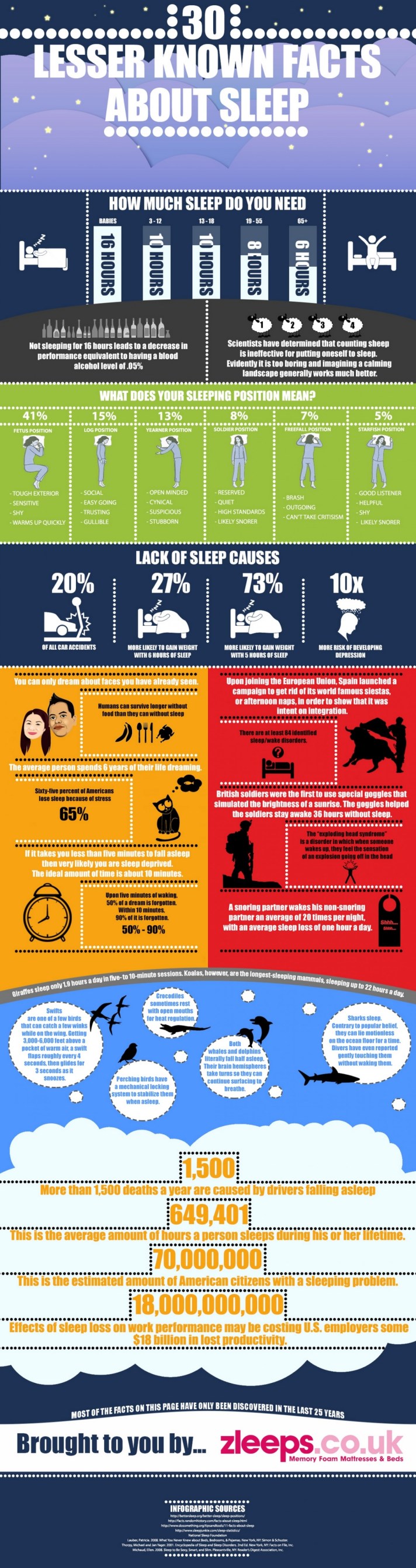
 

30 Lesser Known Facts About Sleep

30-lesser-known-facts-about-sleep_51a48cf39d78a_w1500

About The Sundance Company
Established in 1976, The Sundance Company has the experience to help you with your commercial real estate needs throughout the Boise Valley. If your requirements include property management, leasing, real estate development, project planning, construction or space planning then look to us. The Sundance Company has more than 1.5 million square feet of office and industrial space available in prime locations in the Boise metropolitan area. More information is available at www.sundanceco.com or 208.322.7300.

Three Ways Technology is Improving the Office

We live in a changing world shaped by technology. From Uber to the iPhone, better technology has made our lives easier and made us more connected. Perhaps nowhere is this truer than in the modern office.

Workers enabled by mobile devices are no longer required to come into the office to do work. Videoconferencing makes even remote collaboration possible, for example. As a response we’ve seen work layouts change to reflect the new way that work is done. Desks may no longer be assigned, and employee to desk ratios are decreasing. It’s made the open office concept possible.

But for all that the office has changed, when it comes to creating a more technologically forward office, most are still lacking.

Employees don’t see it changing any time soon: a recent Dell and Intel study showed that globally, only 57 percent expect to be working in a smart office within the next five years. Here in Canada, we actually fared the worst, with only 39 percent of employees expecting this.

Complacency is dangerous in any aspect of life but for workplaces fighting for talent, the impetus to shift to more tech-forward offices is even greater. That same Dell report showed that almost half of millennials are willing to quit their jobs if a company’s office technology is not up to their standards. A larger 80 percent note that office technology it would have an impact on whether they choose to take a job.

However, while implementing technology in the workplace is important, tech for tech’s sake isn’t the right answer. It’s important to design with the right type of technology in mind and ensure it can actually enhance the work experience for users.

Where design fits in: understanding user needs

Users of a space don’t always know the options that are available to them and what is or isn’t feasible. Yet when they see something like wireless charging or smart sensor technology in use, they are blown away and wonder how they ever lived without it.

Like any good tech application, implementing the right mix of technology that can enable not only better experience for users, but also better performance. For designers, the question that needs to be answered is how that gap can be filled.

Making employees’ lives easier

Good technology should make the user experience in a workplace more enjoyable. I’ve seen this well-executed in a number of newer offices recently, and the solutions can be really simple fixes that add a ton of value.

Wayfinding

Some of the most effective solutions I’ve seen deal with helping employees actually find their way around the office. Wayfinding can take the form of simple signage — it doesn’t always have to be technical.

For example, at Deloitte’s new Toronto headquarters where no one — not even the CEO — has an assigned seat, signage is present across the space to make it easier for users to understand the new layouts and ways of working.

Meeting room booking is also huge in allowing employees to be able to properly utilize open concept offices and hot desking environments. It provides visibility into where people are and how they are using the space from both an employee and management perspective.

Power access

Another thing I see in almost every office today — even with the additional outlets available at individual workstations or raceways in desks — is the lack of effective power solutions. While everything in the office has changed, the best we can do so far is bring power outlets closer to occupants. Wireless charging technology is a game changer that is going to do a lot to support mobile work environments.

Consider the average day of an employee in a hot desking environment today. Many of these systems are based on utilization rates that allow for one to one-and-a-half desks for every two employees. When the mobile workforce moves in and out of the office, they’re often in face-to-face meetings or at unassigned work stations. Providing easy power access that doesn’t require them to bring a cord is one way that technology can help enable the new way work is done.

While organizations like Google were among the first to install ChargeSpot and adopt wireless charging technology for offices, more traditional firms are using it now, too. Banks in both Canada and North America have adopted the technology and are looking at expanding pilots. Law firms are using ChargeSpot to provide a better experience for clients and employees for example.

It’s a testament to the fact that workplace technology is now playing a large role in the battle for talent. With banks, insurance companies, and law firms competing with tech companies for the brightest talent, their workplaces must reflect a better experience.

Choice and flexibility

Choice and flexibility in the workplace are two ways that employees are being compensated for giving up personal space in the shift to the open office. However, creating true choice in the workplace requires more than just building multiple spaces within an office. Changes in layout must be supported with not only strong leadership and company culture, but also technology and ergonomic design considerations. These features ensure that choices are real and practical.

Lack of technology in a space can inhibit an employee’s ability to use it. Access to power enables mobility, lack of it inhibits it. Additionally, concerns like screen availability or booking room software will limit the functional use of any space. For example, if a presentation needs to be made and the capacity is not there, use is limited. Similarly, if employees have an issue securing a room with a booking system, that’s a deterrent.

These are both examples that limit an employee’s choice in using different spaces within an office. A Knoll report actually highlighted, anecdotally, that employees will generally use the meeting rooms with the best technology, regardless of the size appropriate for their meeting.

Considering the massive shifts going on in the workplace from individual to collaborative settings, equipping these with the right equipment is paramount for effective use and avoiding usage bottlenecks in the employee user experience.

On the horizon

There is technology being embedded in the backbone of the office right now. Deloitte’s Toronto Office has a concierge service to help employees not only use their office technology, but also replace lost or forgotten cords for employees throughout the day (mobile workers forget laptop cords at home). Their Amsterdam location, dubbed “The Edge”, is the latest in smart building technology, utilizing sensors that let staff know even then the milk in a coffee machine is low. Combining virtual assistants with sensor and booking technology means that Siri or Alexa could be helping employees throughout the day, not only in planning, but in executing meetings, and more.

Talking about AI and smart offices and their impact is very buzzworthy right now. It’s a hot topic because it’s interesting, but at the same time it is important to recognize that we must address some fundamental issues about creating better basic infrastructure around power before discussing AI trends in the workplace. In the world of the open office, a lot of buzz went into slides, cool lounge areas, and fully open funky style atmospheres. Yet now we see the perils of neglecting basics like acoustics and privacy.

The path ahead looks bright as top organizations are blazing the trail forward on what better technology in the office looks like, but it’s important not to forget the fundamentals.

This story originally appeared on the WorkDesign Magazine website.

About The Sundance Company
Established in 1976, The Sundance Company has the experience to help you with your commercial real estate needs throughout the Boise Valley. If your requirements include property management, leasing, real estate development, project planning, construction or space planning then look to us. The Sundance Company has more than 1.5 million square feet of office and industrial space available in prime locations in the Boise metropolitan area. More information is available at www.sundanceco.com or 208.322.7300.


How Much Does A Lyrical Good Time Cost?


About The Sundance Company
Established in 1976, The Sundance Company has the experience to help you with your commercial real estate needs throughout the Boise Valley. If your requirements include property management, leasing, real estate development, project planning, construction or space planning then look to us. The Sundance Company has more than 1.5 million square feet of office and industrial space available in prime locations in the Boise metropolitan area. More information is available at www.sundanceco.com or 208.322.7300.

Does Coffee Improve Your Productivity?

ig_coffee-copy


About The Sundance Company
Established in 1976, The Sundance Company has the experience to help you with your commercial real estate needs throughout the Boise Valley. If your requirements include property management, leasing, real estate development, project planning, construction or space planning then look to us. The Sundance Company has more than 1.5 million square feet of office and industrial space available in prime locations in the Boise metropolitan area. More information is available at www.sundanceco.com or 208.322.7300.

Office Design That Boosts Workplace Wellbeing

Wellbeing in the workplace is rocketing up the agenda for a host of reasons. White collar work is increasingly about ideas and collaboration rather than repetitive clerical tasks, so staff needs are changing. And for companies engaged in the war for talent, wellbeing can be a differentiator. These issues coupled with the costs of recruitment and falling production levels are having an impact on office design, layout and ergonomics.

Many of the changes are backed up or informed by recent academic research into wellbeing in the workplace and take into account the new WELL Building Standard, a system for measuring, certifying and monitoring the performance of building features that impact health and wellbeing. The upshot is a slew of new ways of working that are designed with the employee front of mind.

For office designers and employers, productivity levels are a particularly hot topic as UK productivity remains stubbornly poor. In response experts say we need to think of people not as units of production, but in terms of the whole person.

Office Wellbeing

In wellbeing terms, as long as staff have a decent office chair and a sit-stand desk, there’s less risk of physical injury. Instead, mental health issues such as depression and stress are major concerns. According to a report from the Health and Safety Executive, stress accounted for 45 per cent of all working days lost in the UK during 2015-16 due to ill health. So getting the workplace right is important to public health officials as well as employers and, of course, their employees.

Likewise, paying attention to wellbeing can bring down recruitment costs as staff are less likely to leave. The cost of recruiting a skilled person is estimated at £100,000, says Dr. Kerstin Sailer, reader in social and spatial networks at the Bartlett School of Architecture.

“If you reduce your staff turnover by a small percentage, you can save a lot of money and the design of the workplace is something people [potential new recruits] are increasingly wanting to see,” he says. Couple this with stiff competition among employers for knowledge workers, then wellbeing in the workplace comes into its own.

Offices designed with these issues in mind can make people feel better emotionally and physically, and can help them with concentrating and collaborating. The physical wellbeing of sedentary office workers is high profile because of all the data collected, explains Bob King, chief executive of ergonomic office furniture company Humanscale. “There’s been a recent rash of studies saying sitting still is the new smoking because our bodies were designed to move,” he says.

At the same time, open-plan environments are getting a bad press, with suggestions that they favor extravert personalities over introverts. Open plan has also become associated with stress and anxiety because of the propensity for disturbance and distraction.

“Everyone’s got headphones on, which is a cry for privacy,” says David Watts, managing director of human behavior and design firm CCD. “If open plan was meant to encourage interaction, it’s failing.”

Putting This Knowledge into Practice

As wholly open-plan environments fall out of favor, offices are being redesigned to accommodate more varied work settings, known as activity-based working (ABW), and more opportunities for movement.

Staff at Australian health insurer Medibank have more than 26 different work settings to choose from at its Melbourne headquarters. These include indoor quiet spaces, collaborative hubs, Wi-Fi-enabled balconies and places to work standing up. This ABW approach not only encourages people to move around, it can be good for the social and collaborative aspects of work.

Matt Blain, a principal at Hassell, which designed the office, points to the bold staircase which winds up the atrium. “The stairs were about movement throughout the workplace and getting people to travel between floors, so it broke down the silos and encouraged physical movement,” he says.

A similar approach was taken on London’s Southbank at Sea Containers House, the new 226,000 sq ft home of WPP businesses. “If you provide an environment with choice and diversity, then you have to facilitate ease of movement from one setting to the other,” says Colin Macgadie, creative director BDG, which designed the interiors.

BDG installed 12 new sets of stairs between floors, meaning some floors have three staircases. “That gives people greater interconnectivity between floors, without having to swipe a security card, and encourages them to be active,” he says. But it goes further than that. The steps in Sea Containers House are wider and shallower than normal; shallower to encourage people to move more slowly, and wider so they can stop and chat.

The Downsides

While more and more workplaces are getting on the ABW bandwagon, Dr. Sailer cautions: “People are not as flexible as everyone likes to think. I think people are creatures of habit. A lot of people just can’t be bothered to switch work settings.” And if they hot-desk, her research shows they are likely to return to the same spot each day to sit with their friends.

The irony is that some of these new settings may not be that good for us. Being slumped in a squishy sofa and working from a handheld device is not a healthy set-up for long periods. “We need to start thinking about making these informal, collaborative spaces healthy, productive environments to work in,” says Mr. King. Humanscale’s Diffrient Lounge Chair hopes to do that. It reclines so you can put your feet up and work almost horizontally. And it has a tray for a laptop, plus the option of a 27-inch touchscreen, where you can dock your phone or iPad.

Many workplace designers believe that we are only on the cusp of this new work environment. “The big organizations are adopting these principles and smaller ones will follow,” says Mr. Blain at Hassell. Next, it will be landlords and real estate developers hoping to attract multiple tenants.

BDG’s Mr. Macgadie adds that the workplace will borrow increasingly from the hospitality and leisure industries. This could be a yoga room for some stretching, a juice bar for a healthy smoothie or relaxing on terrace. “In the future, alternative settings will shift to be less about work and more about wellbeing,” he predicts.

This story originally appeared on the Raconteur website.

About The Sundance Company
Established in 1976, The Sundance Company has the experience to help you with your commercial real estate needs throughout the Boise Valley. If your requirements include property management, leasing, real estate development, project planning, construction or space planning then look to us. The Sundance Company has more than 1.5 million square feet of office and industrial space available in prime locations in the Boise metropolitan area. More information is available at www.sundanceco.com or 208.322.7300.