Which Destination Matches Your New Year’s Resolutions?

About The Sundance Company
Established in 1976, The Sundance Company has the experience to help you with your commercial real estate needs throughout the Boise Valley. If your requirements include property management, leasing, real estate development, project planning, construction or space planning then look to us. The Sundance Company has more than 1.5 million square feet of office and industrial space available in prime locations in the Boise metropolitan area. More information is available at www.sundanceco.com or 208.322.7300.

Drone Technology Might Guide The Next CRE Investment Boom

Drone technology has become a multi-billion-dollar business, as consumer uses multiply and the U.S. military begins phasing out manned vehicle operations in favor of unmanned flights, leading real estate investors and developers to pay attention.

The Association for Unmanned Vehicle Systems International (AUVSI) predicts that drone production will grow to $82.1 billion and more than 100,000 jobs across the country by 2025, assuming that the Federal Aviation Administration (FAA) cooperates. The FAA is still working on complete rules for drones, with full publication not expected until at least next year. Even with full rules not yet in place, the FAA has granted more than 1,000 exceptions that allow current drone use for agricultural, businesses and law enforcement purposes.

Some states are expected to see more investment in drone technology than others, with the differences related to economic support, current regulations and available infrastructure. Drone technology is already in wide use in countries such as Japan, and the U.S. is catching up as the regulations are written. Currently, U.S. drone manufacturing is still at the nascent stage, with research and development handled here and production handled overseas, but the industry is expected to benefit all states as demand expands. California already has $180 million in drone company investment, according to AUVSI. The next top four states for drone development are, in order, Washington, Texas, Florida and Arizona.

“Unmanned aircraft systems into the national airspace system will have tremendous economic and job creation impacts on the aerospace industry and aid in driving economic development in many states across the country,” according to a study published by AUVSI. “Similar to other industries, job growth will stretch into many additional sectors, and the economic growth in the aerospace industry will support the growth in many other businesses across multiple U.S. industries, including the hospitality and entertainment industries.”

In Grand Forks, N.D., a company has opened the first business park solely dedicated to drone manufacturing, testing and operations. Grand Sky Development Co., a subsidiary of Infinity Development Partners LLC, has already signed two leases at Grand Sky, located at Grand Forks Air Force Base. The developers are working to develop 217 acres at the base for commercial use, through an agreement with Grand Forks County, totaling 1.2 million sq. ft. and an expected $300 million in investment.

San Diego-based Northrup Grumman System’s Corp., which was recently awarded a $3.2 billion contract to deliver the large Global Hawk unmanned aircraft for the U.S. Air Force, has agreed to lease at Grand Sky, along with General Atomics Aeronautical Systems Inc. Both companies are expected to build and operate out of up to 100,000 sq. ft. of space, says Jeff Donohue with Grand Sky.

“We’re the first drone tech center in the country, with direct access to an FAA test flight site and restricted airspace,” Donohue says. “We’ve had dozens of inquiries already, including from small companies that might take 5,000 square feet to 10,000 square feet, so we’re considering offers from developers to build a 50,000-square-foot speculative building. Ultimately, we’re looking at 400,000 square feet of runway access property and 800,000 square feet of support space, including data centers, which we think will be a critical component to provide data storage for the aircraft. Just one flight can generate a terabyte or more of data.”

He says in a few years, people should expect that unmanned aircraft will share the skies with commercial jetliners, once the FAA has rules locked in place. Uses will include property management, film production, utility company inspections, oil and gas exploration, disaster management, telecommunication, aerial mapping, weather monitoring and, possibly, delivery by companies such as Amazon. The Department of Defense will also be a big customer, Donohue says, as current aircraft such as the U-2 spy plane are scrapped in favor of unmanned flight.

“The military currently can’t train their pilots fast enough to meet the projected demand,” he says. “Just now, the consumer demand is booming. There’s a tremendous amount of applications by firms to gain FAA exemptions, and that number is expanded every day. Just within three years at Grand Sky, I think we’ll have 400,000 square feet leased out.”

The story originally appeared on the NREI website.

About The Sundance Company
Established in 1976, The Sundance Company has the experience to help you with your commercial real estate needs throughout the Boise Valley. If your requirements include property management, leasing, real estate development, project planning, construction or space planning then look to us. The Sundance Company has more than 1.5 million square feet of office and industrial space available in prime locations in the Boise metropolitan area. More information is available at www.sundanceco.com or 208.322.7300.


Festive & Fun Holiday Facts 2015

About The Sundance Company
Established in 1976, The Sundance Company has the experience to help you with your commercial real estate needs throughout the Boise Valley. If your requirements include property management, leasing, real estate development, project planning, construction or space planning then look to us. The Sundance Company has more than 1.5 million square feet of office and industrial space available in prime locations in the Boise metropolitan area. More information is available at www.sundanceco.com or 208.322.7300.

Your Office is Boring: Amenities Matter

It doesn’t matter what you’ve done with the space. Whether your office is walled with reclaimed mahogany and marble from exotic corners of the world or checks the box for every developing trend, by Friday afternoon everyone is looking for a way out. Features and designs that look great in snapshots and capture envious stares from visitors become part of the same drab landscape like everything else to employees who count their days among the thousands.

Trying to reimagine the office every time the shine wears off is expensive and diverts resources from helping your business move forward. Instead, think of office suites as part of an ecosystem of resources and amenities designed to supplement the day-to-day of modern tenants. Step back from conventional nine-to-five paradigms and look at the world as more mobile than it was before you had to answer a landline.

Not how but where

Building owners and tenants are learning that technology isn’t just changing how business is done. It’s changing where business is done. Smartphones and go-anywhere Internet connections are enabling people to work from wherever they need – I’m writing this from the kitchen table – and reducing the amount of space that people need. Office managers don’t need to allocate 250 square feet to every employee. A slightly transient workforce doesn’t need to curate a home away from home — because anywhere can be a place to get things done. The benefits? Lower cost leases (or higher quality space), more flexible working hours and higher productivity.

Not your mother’s office space

Buildings, too, are challenging the status quo. Workplaces don’t look like “Office Space” anymore, and neither do the suites they’re placed in. Tenants aren’t expected to cross grass fields and highways to get a bite to eat. Partnerships with on-site food vendors to run lounge areas and restaurants make snacks and even complete meals a snap. With real gyms, areas that border on being rec rooms and observation decks all becoming the norm, people are learning that it pays to get up and move around. Seeing the same thing all day, every day gets repetitive and dull – all of which isn’t productive and doesn’t foster creativity.

Don’t forget basics

All of this isn’t to say that traditional real estate canon should be ignored. Attractive, open spaces framed by glass that welcomes in visitors are the new standard, and location now matters more than ever. Offices evolve and work styles grow — which means we shouldn’t look at cubicles and off-whites in the same way as people did 30 years ago. There’s more than one right way to approach the issue, but you should consider all options and variables ranging from outright productivity and data sensitivity to Wi-Fi in tenant lounges.

Boring isn’t a four letter word; it’s just a fact of life. Photographers like to say “zoom with your feet” to change your view. Sometimes, commercial real estate professionals and office leaders could use the same advice.

The story originally appeared on the Knowledge Leader website. 

About The Sundance Company
Established in 1976, The Sundance Company has the experience to help you with your commercial real estate needs throughout the Boise Valley. If your requirements include property management, leasing, real estate development, project planning, construction or space planning then look to us. The Sundance Company has more than 1.5 million square feet of office and industrial space available in prime locations in the Boise metropolitan area. More information is available at www.sundanceco.com or 208.322.7300.


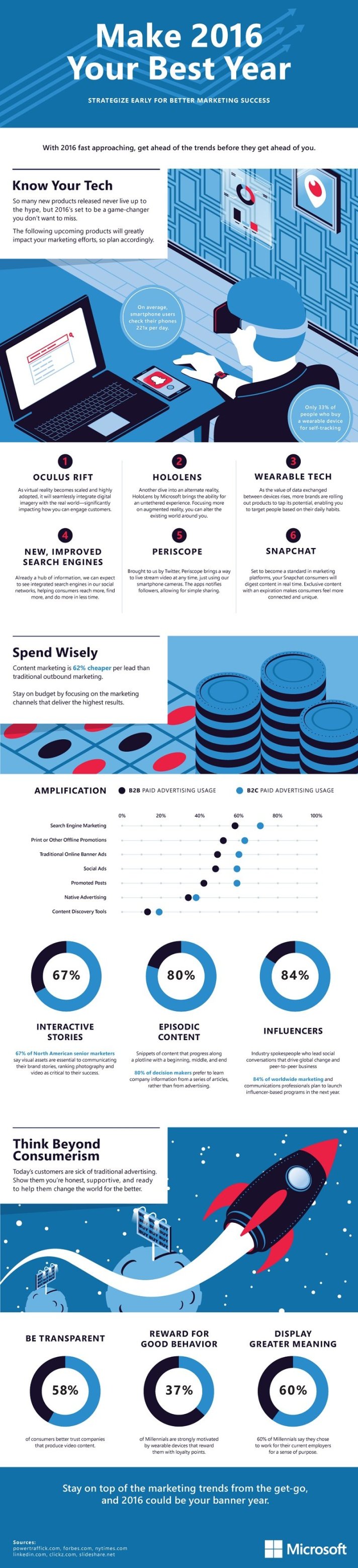
The Psychology of Colors in Marketing


About The Sundance Company
Established in 1976, The Sundance Company has the experience to help you with your commercial real estate needs throughout the Boise Valley. If your requirements include property management, leasing, real estate development, project planning, construction or space planning then look to us. The Sundance Company has more than 1.5 million square feet of office and industrial space available in prime locations in the Boise metropolitan area. More information is available at www.sundanceco.com or 208.322.7300.

Happy Thanksgiving 2015


About The Sundance Company
Established in 1976, The Sundance Company has the experience to help you with your commercial real estate needs throughout the Boise Valley. If your requirements include property management, leasing, real estate development, project planning, construction or space planning then look to us. The Sundance Company has more than 1.5 million square feet of office and industrial space available in prime locations in the Boise metropolitan area. More information is available at www.sundanceco.com or 208.322.7300.

Office Furniture is Finally Changing. Here’s How

As it turns out, computers revolutionized everything but our office furniture.

It’s been three decades since the personal computer was introduced into most American workplaces, yet the average worker remains chained to a desk, tied down by three-prong power cords, phone cords, USB cables, and phone chargers.

That’s about to change. Some companies are exploring getting rid of landline phones. Some workers now exclusively use laptops and tablets that allow more mobility. And battery life is improving on many electronics.

Now, office furniture is finally catching up. One of the biggest trends in the industry right now is making everyday furniture more compatible with technology. That means building electrical panels in the armrests of sofas and lounge chairs and in the middle of tables complete with USB ports and 110-volt outlets so that you can recharge your cell phone or plug in your computer while you sit.

This is the first step toward the true office of the future, a place where workers are unchained from their desks; free to work wherever it makes the most sense. The office of the future, as The Atlantic suggested in “Thinking Outside the Cube”, will look less like the Jetsons and more like Harry Potter, where everyday office furniture like desks and chairs are almost magical: part furniture, part machine.

On deadline? Work from a designated quiet space free from distraction. Brainstorming? Collaborate with coworkers in a plug-and-play conference room. Doing something creative? Get your juices flowing on a comfy sofa with a view while you plug in your laptop and smartphone.

In our daily conversations, we use the office as shorthand for our jobs: “How was the office today?” “I have to go to the office.” In a way, this is backwards.

The office, after all, is not the cause of our work, but a symptom of it. And our offices aren’t the deciding factor in how we work — they are designed to meet the demands of our jobs, within the limits of our technology.

As the CEO of a family-owned office furniture company now in its 20th year, I spend a lot of time thinking about how and why we use offices.

What is certain is we use offices because of the oldest–and still best–form of communication: face time.

Telephones, email, chat programs like Slack and Hipchat and videoconferencing programs like Skype and Google Hangout have their place, but nothing beats sitting across the table from another human being.

Working together in person helps strengthen and deepen our connections with the coworkers we work most closely with, and it encourages the kind of serendipitous encounters that help ideas spread across departments.

For that reason, I’m not too concerned that the office will go away. Until someone comes up with a new form of communication that is as effective as simply being in the same physical space together on a regular basis, there will be offices.

But how we work within the office is radically changing. That’s because the modern office was designed around some technological limitations that don’t really matter anymore.

First, almost every worker in an office needed a landline phone, since it was the primary way that they communicated with people inside and outside the company. Those had to be hardwired to a very specific location within the office.

Now, thanks to email and cell phones, we no longer really need to have a landline phone. (It’s probably more of an annoyance, since voicemails left on a landline phone aren’t as easy to check when you aren’t at your desk.)

Second, computers and other electronic equipment were oversized and needed dedicated power sources. That meant a bulky electrical strip underneath each desk for the computer monitor, CPU, printer, fax machine, and whatever else the office worker needed to get their work done.

Now, thanks to laptops, smartphones, and iPads, that’s not really true either.

The only reason that we continue to sit in the same spot every day at the office is to access an outlet and out of sheer habit.

With this new integrated technology into everyday office furniture there’s no reason that businesses couldn’t set up a bunch of plug-and-play workstations with built-in, electrical panels in the armrests, and let people sit and work wherever they want, whenever they want, without having to search for an outlet.

And that’s just the beginning. The office of the future is coming, at long last.

The story originally appeared on the Huffington Post website.

About The Sundance Company
Established in 1976, The Sundance Company has the experience to help you with your commercial real estate needs throughout the Boise Valley. If your requirements include property management, leasing, real estate development, project planning, construction or space planning then look to us. The Sundance Company has more than 1.5 million square feet of office and industrial space available in prime locations in the Boise metropolitan area. More information is available at www.sundanceco.com or 208.322.7300.


How Millennials Are Changing the Office Environment

We’ve all heard rumors about Google’s office – scooters, Legos, and copious amounts of free food. Facebook embraces its startup culture with an internal bike shop. Twitter offers free laundry services. Thrillist offers paid time off on your birthday every year. The youngest generation to hit the workforce has set of a wave of new office habits, needs, and wants.

By 2020, millennials will make up 40-50% of the working population. Although not every millennial wants to work at a startup, their wants are very different than previous generations — and not every industry has adapted seamlessly to these changes and the advent of technology. When working with new tenants, regardless of their industry, keep in mind these key millennial impacts.

Globalization and Technology

There’s an app for that. Millennials (and Generation Z-ers) have never known professional life without the Internet. Can your building keep up with the demand of information, when peers and competitors are just a text, email, or tweet away? The workplace must adapt to working from anywhere, connecting with global offices, data security, and mobility within the office itself. The real estate industry is adapting, from flexible Steelcase furniture configurations to Internet connectivity ratings with WiredScore.

More Collaborative and Flexible

On a related note, internal physical flexibility and collaboration is just as important. Technology brought on the sharing economy, which in turn brought a wave of access to information, not ownership of it. Employees are collaborating and sharing knowledge, from brainstorming to execution. They’re working in pods, having impromptu meetings on the stairs, hanging out at team lunch, and brainstorming in huddle rooms. Cubicles have effectively disappeared from the millennial-focused workplace. All employees are able to contribute and feel essential. Your tenant space needs to allow for flexibility. Show you know your stuff with walkthroughs of successful collaborative environments, suggestions on hand for space use, and recommendations for interior designers and furniture manufacturers.

Branding and Culture

In a 2014 study, the White House identified millennials’ key priorities: family, community and creativity. In an office environment, this translates to a strong brand, space to be proud of, and room to grow. The trend is no longer kitschy for kitschy’s sake. Tenants want a space that reflects their brand, operations style, and business objectives. The advent of WeWork and other coworking spaces means young companies can have a big impact on a small dime – be prepared to compete with great amenities, easy branding and PR opportunities, and built-in community. In a recent survey of 80 owners, 80% believe that “Creative space utilization and marketing is becoming more important to my business.”

Offices Becoming More Like Home

Millennials never quit. The 9-5 became the 8-6 became the 24/7 as the workday adapted to globalization and technology. Early birds are in from 7am-6pm, night owls are in from 11am-10pm, and we don’t bat an eye at 3am emails. Your cell phone is an extension of your arm and now talks to your car, computer, 1Password, and dating life. Work-life balance is no longer about keeping it even, but a seamless integration between the two. In response to this 24/7 life, workspaces are beginning to look like living environments. Offices are outfitted with gyms, resource libraries, and game rooms. Pantries are complete with cabinets full of cereal and a beer fridge next to the regular refrigerator. Some offices have even gone so far as to install green walls, so you really never have to go outside. Outside the office, there’s a demand for urban, mixed-use environments that offer ease of socializing, dining, living and working. This ease of access is exciting for previous generations, but probably won’t lead to them staying at work until 11pm.

In Conclusion: Competition

There is a push for better and better office spaces. Better and better perks. The job market is rebounding and technology is evolving. More of the younger tech-savvy generation is joining the workforce. The news is telling us to go go go and try to stay ahead of the pack. Your tenants are feeling the pressure to meet these demands, and you can help them do it.

The story originally appeared on the Hightower website. 

About The Sundance Company
Established in 1976, The Sundance Company has the experience to help you with your commercial real estate needs throughout the Boise Valley. If your requirements include property management, leasing, real estate development, project planning, construction or space planning then look to us. The Sundance Company has more than 1.5 million square feet of office and industrial space available in prime locations in the Boise metropolitan area. More information is available at www.sundanceco.com or 208.322.7300.


Five Strategies to Attract the Best Employees

It’s déjà vu all over again. Everywhere we look, firms are competing for the best talent and can no longer rely on tried-and-true strategies. Now is the time to raise the bar on your efforts to find and win the best talent. Here, Marjanne Pearson, the founder of Talentstar and an industry pioneer in talent, leadership, and business strategies for architecture and design practice, explores a few of today’s best strategies.

  1. Attract: Align your brand promise with their values and concerns.

Which generations are you trying to attract?

Gen X believes in work-life balance. These 34- to 48-year-olds grew up with the concept and value it for themselves and their families. Although generally content and optimistic, they are specifically concerned about providing for their families and taking care of their own health and well being. They are looking at their own futures and how they can create theirs with you.

Millennials are digital natives and peer-oriented. They want to work with people they can trust, and they trust the opinions of people they know. They are inclusive and welcome diversity, they have been active in community services, and they seek others who support social responsibility. And they are green — as children, they learned to be mindful of the environment, and they expect others to be, too. Eventually, they want to work for themselves, so they are seeking like-minded entrepreneurs with whom they can learn and grow.

  1. Captivate: Put your firm at the center of their conversation.

Before a potential employee considers your firm, they want to find out whether it’s the right place for them — your core values, culture, and work environment.

Have a people-rich marketing strategy. Actively highlight the members of your firm within and beyond the workplace, featuring engaging shots of real people – candids of teams working and having fun together — as well as stories that reinforce the images. Have fun with video. YouTube is the second largest search engine and reaches more US adults ages 18-34 than any cable network.

Seek opportunities to reinforce motivational themes — opportunity, accomplishment, recognition, purpose, social responsibility, sustainable design. What matters most to you will matter to them, too.

  1. Connect: Reach the right audience.

Where do people go for information, for work, and for fun? Firms post jobs on their websites, but only rarely are they captivating. If you want a cross-section of professional candidates, post a job on LinkedIn. If want to create a pipeline of recent graduates, publish a career guide and share it with the architecture and design schools. If you are looking for specific types of expertise, go to the publications (in print and online) that your audience will read. For example:

  • Archinect.com is the go-to platform for jobs in architecture, drawing repeat visitors because of its content — articles and commentary about architecture and design today.
  • TheMuse.com was developed by millennials for millennials and offers career advice as well as opportunities. They currently represent hot new tech companies like Uber and Airbnb, but design firms may not be far behind.
  • WorkDesign.com “explores the ideas that shape the places we work” — new territory with a new approach. As a result, WDM is attracting their target audience and yours, too — 25- to 35-year-olds in the workplace industry.
  1. Engage: Build relationships over time.

In the old days, recruiting was a transaction. We posted an ad, people applied, and we hired someone. Today, it’s not enough to collect applications that are scanned using complex algorithms. Smart firms are looking for next-gen leaders and giving them opportunities to grow and develop with them.

Begin your conversation with a great tagline and ad copy. Make your talent message prominent — on the back of business cards, email signature lines, social media accounts, white papers, YouTube, and more. Find the right places to publicize opportunities, drive people to your social platforms, and then create links to job descriptions that skip the blah-blah-blah and focus on them. What are they seeking? What are you really offering? And of course, what’s in it for them, and for you?

  1. Build: Create the future of your firm.

We are all in the business of talent spotting. Don’t collect applications in a database. Open the door to relationship building. When you find someone in whom you are interested, create opportunities to get to know them better — include them in company events, introduce them to your colleagues, and find opportunities to collaborate on community or civic projects or professional activities. Learn more about them and how they engage with others.

Draw them into the center of the conversation with you, and instead of employees, you’ll have key collaborators with whom you can build a successful future together.

The story originally appeared on the Work Design website.


About The Sundance Company
Established in 1976, The Sundance Company has the experience to help you with your commercial real estate needs throughout the Boise Valley. If your requirements include property management, leasing, real estate development, project planning, construction or space planning then look to us. The Sundance Company has more than 1.5 million square feet of office and industrial space available in prime locations in the Boise metropolitan area. More information is available at www.sundanceco.com or 208.322.7300.